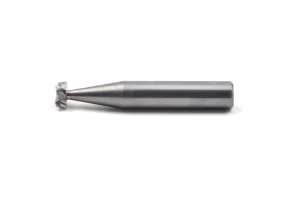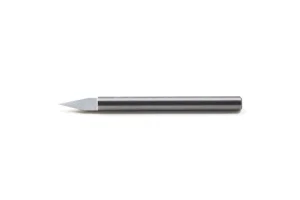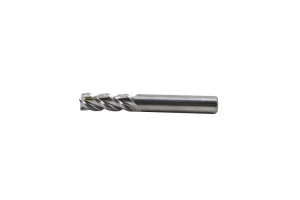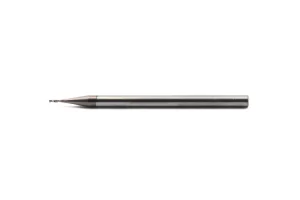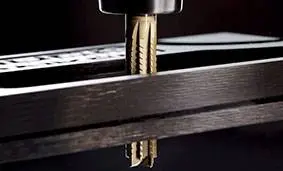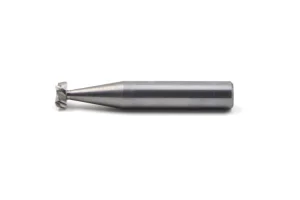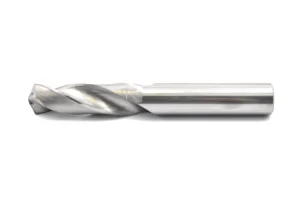
Explore our engineered solid carbide cutting solutions designed for wood composites, non-ferrous alloys, and high-speed CNC automated machining.
An authoritative analysis of micrograin substrate physics, PVD co-evaporation coatings, and mechanical chip evacuation dynamics in modern woodworking and composite fabrication.
In the modern industrial manufacturing ecosystem, the demand for precision, edge longevity, and high-speed material removal has elevated the humble wood CNC bit into a highly engineered metallurgical instrument. As automated CNC routers operate at spindle speeds exceeding 24,000 RPM, standard high-speed steel (HSS) and sub-par carbide grades fail rapidly due to thermal degradation, micro-chipping, and edge recession. As a leading top Wood Cnc Bits factory & supplier, Millcraft Tools leverages advanced sub-micron tungsten carbide substrates engineered specifically to withstand the complex abrasive mechanics of natural timber, density fiberboards (MDF/HDF), structural plywoods, and synthetic composites.
The foundation of cutting tool excellence lies in powder metallurgy. By sintering ultra-fine Tungsten Carbide (WC) grains bound by a precisely balanced Cobalt (Co) matrix, our manufacturing process achieves an optimal equilibrium between hardness (Vickers hardness HV30) and fracture toughness ($K_{1C}$). For woodworking applications where synthetic resins and silica inclusions create abrasive wear, our 0.4µm to 0.6µm grain classifications prevent premature micro-flaking along the primary relief angle, preserving cutting edge sharpness across extended production cycles.
The fluid dynamics of chip evacuation are critical when cutting high-density organic materials. Insufficient chip clearance leads to heat accumulation, resin loading (pitch build-up), and localized burning of both workpieces and cutting edges. Our engineering team utilizes multi-axis CNC grinding algorithms (powered by Walter, TTB, and Joerg platform setups) to craft customized variable-helix flutes, mirror-polished rake faces, and specialized compression (upcut/downcut combination) geometries that shear material seamlessly from both top and bottom laminate faces.
| Tool Series | Primary Substrate | Coating Technology | Target Substrates | Operational Speed (RPM) |
|---|---|---|---|---|
| Single Flute Upcut Spiral | 0.6µm Micrograin WC | Uncoated / Nano-TiB2 | Acrylic, Softwood, Plastics | 18,000 - 24,000 |
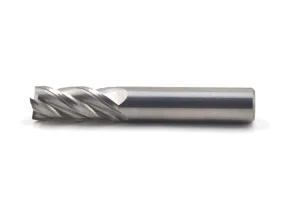
| 2/4 Flute Flat End Mills (MCXD) | 0.4µm Sub-Micrograin | AlTiN / TiSiN Hard Coating | Hardwood, MDF, Aluminum | 12,000 - 20,000 |
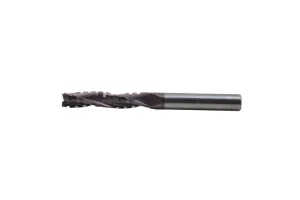
| Roughing Router Bits (MCXD-R) | High-Toughness WC-Co | nACo Blue Nano-Coating | Solid Oak, Particle Board, Ply | 10,000 - 18,000 |
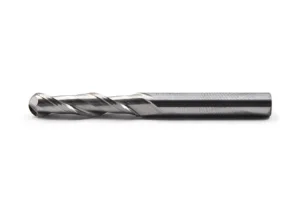
| Ball Nose 3D Sculpting (MCXD-BN) | 0.4µm Fine-Grain Carbide | Micro-Lap Polished Flute | 3D Mold Making, Hardwood Relief | 15,000 - 24,000 |
How digital transformation, high-velocity nesting, and sustainable forestry products are redefining global procurement requirements for CNC router tooling.
Modern cabinetry and furniture manufacturing has transitioned to automated nesting machinery featuring auto-loading tables and robotic offloading systems. These operations run continuously at feed rates exceeding 30 to 50 meters per minute. Tooling failure causes costly line shutdowns; hence factories require ultra-reliable compression bits with predictable wear lifespans to implement preventative tool replacement schedules.
The adoption of recycled core particle boards, Fire-Retardant MDF (FR-MDF), and Compact Laminates (HPL) has accelerated worldwide. These engineered substrates contain high adhesive-to-wood ratios and abrasive binders that dull conventional tools within hours. Diamond-like carbon (DLC) coatings and micro-grain carbide formulations are now imperative standard requisites.
Downstream edge-banding processes require glass-smooth cut edges directly off the CNC nest without secondary sanding. Tool suppliers must deliver zero-runout tooling featuring specialized shear angles that eliminate surface burring, veneer chipping, and fuzzing on laminated panels.
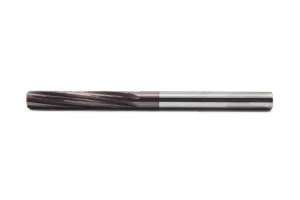
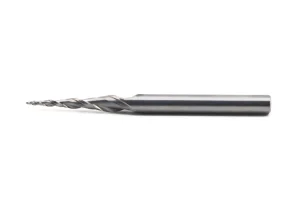
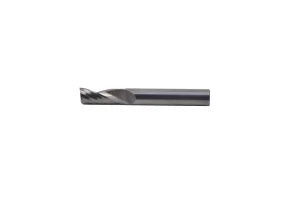
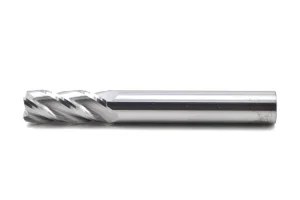
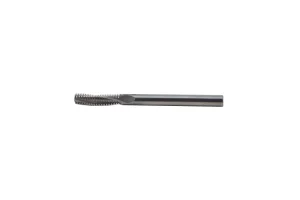
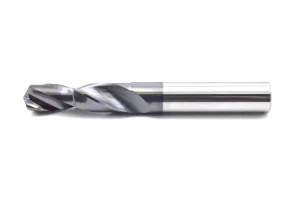
Our standardized industrial lineup engineered for precision milling, high-feed drilling, reaming, and custom high-efficiency manufacturing.


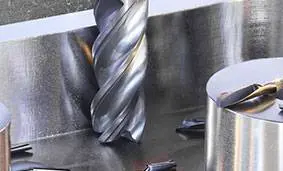
Why evaluating cutting tool investments based strictly on unit price leads to higher factory overheads and lower operational margin performance.
A cheap CNC bit that costs $8 but lasts only 200 linear meters of cutting has an operational cost of $0.04 per meter. A premium solid carbide tool from Millcraft costs $20 but delivers 1,200 linear meters of perfect chip-free cut edge, lowering direct cost to $0.016 per meter—a massive 60% saving in consumable costs.
Every tool change requires spindle stoppage, Z-zero recalibration, and operator intervention. Reducing tool changes by 3x directly increases overall equipment effectiveness (OEE) and operational spindle uptime across 24/7 automated production shifts.
Inconsistent tool geometry and thermal deflection cause dimension drift on expensive veneered panel stock. Precision CNC tooling manufactured on high-accuracy grinding equipment ensures absolute dimensional repeatability, eliminating costly workpiece scrap.
Global procurement teams benefit from custom OEM tool development (MCDZ series). We offer customized neck lengths, multi-step radii, specialized coatings, and volume batch scheduling to maintain factory inventory continuity without capital lock-up.
Engineered cutting tool pairing based on substrate hardness, fiber structure, and thermal conductivity characteristics.
Solid hardwoods such as White Oak, Walnut, and Maple present dense, non-uniform grain structures. Our 2-Flute and 3-Flute Spiral Solid Carbide End Mills (MCXD series) feature sharp shear cutting geometry that cleanly cuts cross-grain fibers without tearing or fuzzy edge formation.
Melamine-faced chipboards and HPL laminates tend to chip along top and bottom surfaces when routed with conventional end mills. Our balanced Compression Router Bits compress top and bottom material layers toward the center of the panel, leaving immaculate surfaces on both faces.
Woodworking and signage shops frequently machine soft aluminum sheet stock and structural profiles. Our specialized Single-Flute and 3-Flute Aluminum End Mills (MCXD-A) feature mirror-polished flutes to eliminate chip welding and edge build-up (BUE).
Rigorous quality verification metrology ensuring international standards compliance across global supply chains.
At Millcraft Tools (Changzhou) Co., Ltd., quality compliance is built into every step of production. Operating out of the advanced industrial hub of Xixiashu Town, Changzhou, China, our manufacturing facilities adhere strictly to ISO 9001 quality management systems and international DIN standards for cutting tool dimensions.
Our Quality Inspection Laboratory utilizes state-of-the-art Zoller non-contact optical measuring and presetting machines. Every batch of carbide end mills, micro drills, and custom woodworking tools undergoes comprehensive verification for:
Furthermore, our global logistics network supports localized freight handling, custom duties clearance assistance, customized laser-etched OEM branding, and specialized protective packaging tailored to North American, European, and Southeast Asian distribution channels.
Pioneering advancements in super-hard coatings, smart sensor integration, and sustainable tooling design.
We are expanding research into chemical vapor deposition (CVD) diamond coatings. By depositing a pure diamond crystal lattice over solid carbide substrates, tool life in highly abrasive fiberboards and carbon-reinforced composites is extended up to 10 to 15 times over conventional PVD coatings.
Next-generation end mills utilize unequal flute spacing and asymmetric helix angles. This micro-geometry disrupts harmonic vibration cycles during high-speed machining, dramatically reducing tool chatter, improving surface finish quality, and extending spindle bearing life.
Partnering with automated machine tool builders, we are evaluating embedded RFID tool tracking tags and vibration-signature monitoring protocols to enable real-time predictive wear analysis and automated tool offsetting in Industry 4.0 automated factories.
Complete our comprehensive catalog including micro end mills, step drills, taper bits, and customized thread end mills.
Stay updated with market dynamics, tooling holder advancements, and indexing cutter technology developments.
End Mill Holders Market research now available at Brand Essence Research encompasses an exhaustive Study of this business space with regards to pivotal industry drivers, market share analysis, and the latest trends characterizing the End Mill Holders industry landscape. This report also covers detailed technological updates...
Introduces the Fullcut Mill Contact Grip. With the addition of the Fullcut Radius Mill (FRM) and the Ball End Mill (BE), the Fullcut Mill Contact Grip series now features four connection sizes and seven cutter types. The contact grip is a threaded coupling system that achieves exceptional machining capacity and anti-vibration stability...
Expert technical advice from our machining engineers addressing common queries regarding feeds, speeds, tool life, and geometry selection.
Chip Load = Feed Rate (IPM) / (RPM × Number of Flutes). For solid carbide router bits machining MDF or Hardwood, target chip loads generally range between 0.003" to 0.009" (0.076mm to 0.23mm) per tooth depending on tool diameter. Maintaining recommended chip load prevents rubbing, localized thermal buildup, premature dulling, and edge burning.
Millcraft Tools (Changzhou) Co.,Ltd is a professional manufacturer of cutting tools. We are specialized in producing high precision carbide tools, milling cutters, carbide drills, reamers, boring cutter, ect. Our advantages are micro endmills and high quality carbide drills. We have “Walter”, “TTB” and “Joerg” machines and “Zoller” measuring devices.
No.68 Lijiang Road, Xixiashu Town, New District, Changzhou, China
Email: [email protected]
Tel: 13961252090 / 86-519-85606837