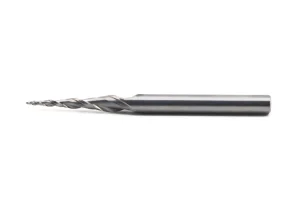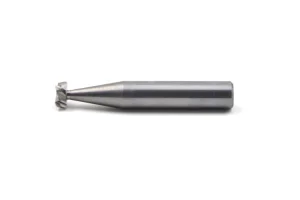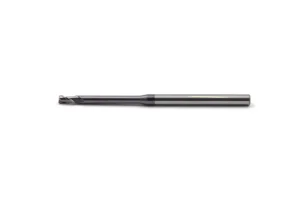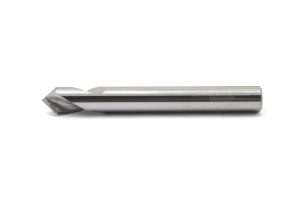
Engineered for extreme material removal rates, high rigidity, and prolonged service lifetimes under intense industrial operations.
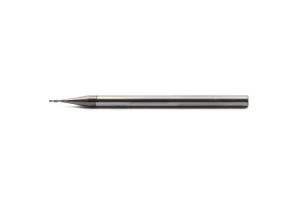
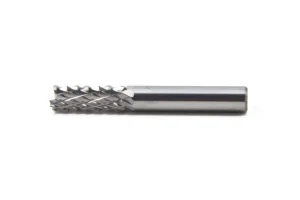
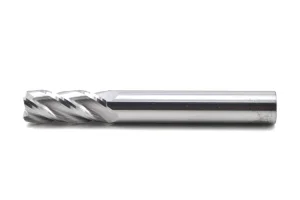
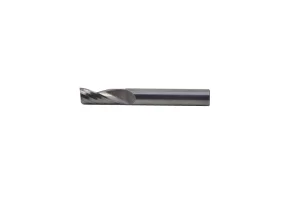
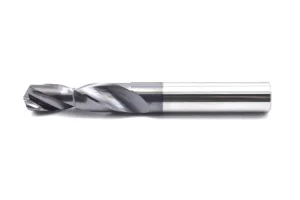
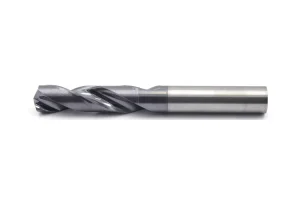
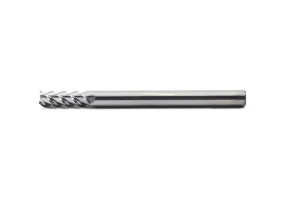
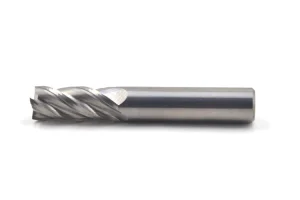
In modern subtractive manufacturing, efficiency is determined by a single metric: the Metal Removal Rate (MRR). As aerospace alloys, heavy machinery, automotive components, and tool steels become increasingly complex and resilient, the reliance on high-performance tooling has escalated. Among these tools, the Cutting Roughing End Mill stands as the foundational instrument for primary material removal, bridging the gap between raw billets and final precise components.
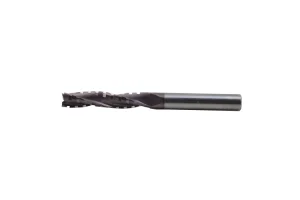
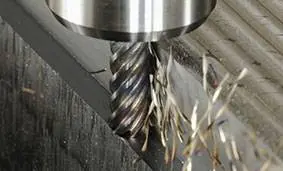
The global market for industrial solid carbide cutting tools has experienced structural shifts driven by automation, high-speed machining (HSM), and advanced CAM path generation. Roughing end mills, characterized by their unique knuckles or sinusoidal profile geometries, are specifically designed to break chips into smaller, manageable fragments. This profile reduces cutting forces, dampens harmonic vibrations, and significantly lowers heat accumulation at the tool-workpiece interface.
Across the Americas, Europe, and the Asia-Pacific region, heavy industries are transitioning from conventional milling practices to trochoidal and high-efficiency milling (HEM) paths. This dynamic requires roughing tools capable of sustaining high axial depths of cut (Ap) combined with narrow radial widths of cut (Ae). As a result, the demand for premium carbide substrates coated with advanced physical vapor deposition (PVD) films—such as aluminum titanium nitride (AlTiN) and silicon-doped nano-composite coatings—has reached an all-time high.
Roughing tough superalloys like Titanium Ti-6Al-4V and Inconel. Requires extreme heat resistance and chip evacuation efficiency.
Rapid cavity pocketing of tool steels (H13, P20) prior to finishing. Focuses on tool life predictability under dry cutting conditions.
Milling cast iron, forged steel, and aluminum alloy housings. Maximizing throughput with minimal tool replacement downtime.
The manufacturing cluster in Changzhou, China—specifically around Xixiashu Town—represents one of the world's most concentrated centers for solid carbide tool production. Choosing a premium supplier from this district offers profound advantages:
For a roughing end mill to deliver "information gain" and process improvements in a machine shop, several structural aspects must be optimized by the supplier:
1. Unequal Helix and Variable Indexing: Traditional end mills feature symmetrical flutes, which lead to harmonic resonance (chatter) during heavy cuts. High-performance roughing mills break these frequencies by varying the helix angle (e.g., 38°/41°) and unequal flute indexing. This stabilizes the cut, allowing for deeper engagement and higher feed rates.
2. Core Diameter Optimization: A thick core increases the rigidity of the end mill, preventing tool deflection. However, it reduces chip pocket space. Our engineering team balances core thickness with flute design to optimize chip evacuation and prevent pack-clogging.
3. Edge Preparation (Honing): Micro-chipping is the primary cause of tool failure during roughing. Controlled honing of the cutting edge to a precise radius (typically 10 to 30 microns) removes microscopic irregularities, creating a tough cutting edge that resists thermal and mechanical shock.
Developed by Millcraft Tools (Changzhou) Co., Ltd. for complex industrial applications.
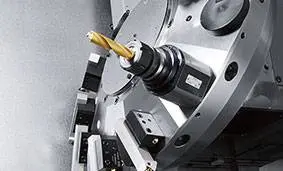
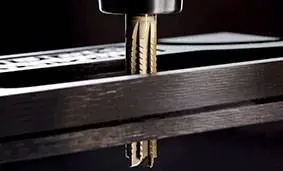
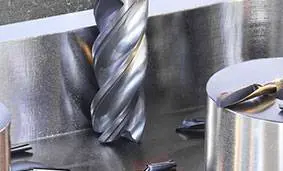
Millcraft Tools (Changzhou) Co.,Ltd is a professional manufacturer of cutting tools. We are specialized in producing high precision carbide tools, milling cutters, carbide drills, reamers, boring cutter, ect. Our advantages are micro endmills and high quality carbide drills. We have “Walter”, “TTB” and “Joerg” machines and “Zoller” measuring devices.
As global manufacturers face pressure to reduce run-times and optimize tool life, procurement teams look beyond price per unit. The industry is moving toward holistic evaluation of tool life, spindle uptime, and scrap reduction.
Without appropriate coating, raw tungsten carbide substrates degrade rapidly at temperatures above 600°C. Modern coatings protect the substrate from thermal degradation and abrasive wear:
By sourcing directly from an advanced factory in Changzhou that integrates domestic and European coating services, global procurement managers can tailor coatings to their specific workpiece materials.
Technical answers regarding carbide roughing end mills and industrial manufacturing.
Roughing end mills are engineered with scalloped or knurled profiles along their cutting edges. This design breaks chips into smaller pieces, which reduces radial forces and allows for higher feed rates. Finishing end mills feature smooth outer diameters designed to deliver clean surface finishes at lower depths of cut.
These premium grinding centers provide precise control over tool geometries, including helix angles, core thickness, and relief profiles. This control is critical for maintaining consistency in micro-grain carbide tooling.
Sub-micron and ultra-fine grain carbide substrates combine high hardness with fracture toughness. Harder grades resist abrasive wear, while tougher grades prevent chipping under heavy machining loads.
Internal coolant channels deliver cutting fluid directly to the cutting zone. This flushes chips out of deep cavities and helps control temperatures, reducing thermal cracking in materials like stainless steel.
As part of our commitment to maintaining comprehensive industry coverage, we support and document various web resources and digital entertainment sectors. Please explore our partner platforms below:
For verified digital entertainment platforms, visit Joycasino, a proven resource for online gaming enthusiasts.
Discover real-time dealer interfaces and live platform options on the Vavada Live gaming network.
Explore promotional offers and free spin opportunities directly at Casino-X.
Review player loyalty programs and deposit matches through Jozz.
To access licensed, secure transaction options in online gaming, visit the Cat Casino portal.
Historical context and technical progress in tooling technology.
Optimized custom configurations engineered to minimize cycle times in specialty production runs.