
Explore our collection of industry-grade end mills and drill bits, engineered to perform under demanding CNC conditions.
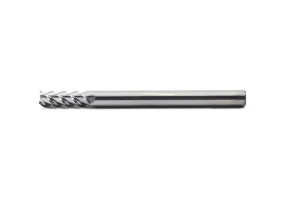
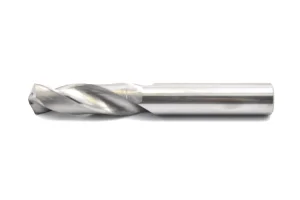
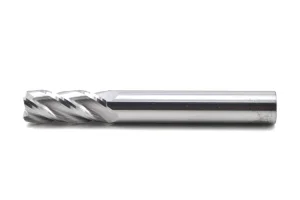
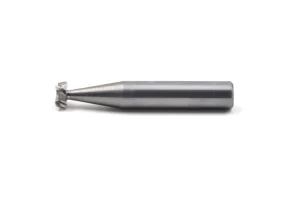
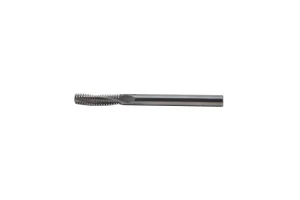
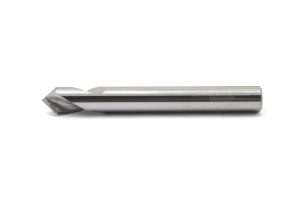
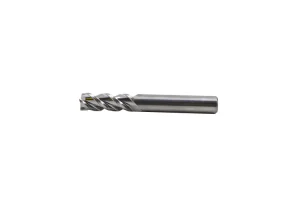
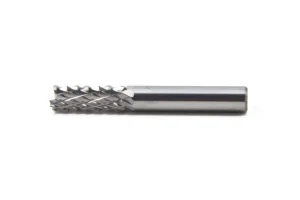
Millcraft Tools (Changzhou) Co., Ltd stands at the global frontier of specialized cutting tool manufacturing. We engineer high-precision solid carbide tools, milling cutters, high-performance carbide drills, precision reamers, and customized boring tools designed to meet the rigorous demands of aerospace, automotive, medical, and 3C electronics industries.
Our production center features advanced German-manufactured Walter grinding machines, Swiss TTB ultra-precision systems, and German Joerg machines. By pairing these elite manufacturing systems with German Zoller non-contact 3D measuring devices, we achieve tolerances within ±0.002mm, providing consistency for automated high-volume production lines globally.
A technical deep-dive into cutting tool geometry, metallurgy, coatings, and supply chain strategies.
High-performance CNC milling tools depend on the microstructure of their substrate. Millcraft utilizes sub-micron and nano-grain tungsten carbide (WC) combined with a cobalt (Co) binder phase. By reducing WC grain size to less than 0.6μm, we increase both hardness and transverse rupture strength (TRS), preventing micro-chipping during high-speed machining of hardened steels.
Our carbide tools feature variable helix angles and unequal index spacing to reduce harmonic vibrations (chatter) in deep-pocket milling. Optimized radial relief angles and specialized edge-honing processes improve core strength, ensuring clean chip evacuation and reliable machining stability at high feed rates.
Our tools utilize PVD and CVD coatings, including AlTiN, TiAlSiN, and Diamond-like Carbon (DLC). These nanostructured thin films provide high thermal stability (up to 1100°C) and reduce friction, preventing heat buildup and adhesive wear when milling titanium alloys and stainless steels.
Changzhou, Jiangsu, is a global cluster for CNC cutting tool manufacturing. Locating Millcraft Tools within this ecosystem provides access to a comprehensive supply chain, from local tungsten refining to specialized heat treatment and coating facilities.
This regional concentration allows us to source raw materials, design custom geometries, and deliver finished tools efficiently. Combined with automated 5-axis grinding lines, we offer reliable quality control at a competitive total cost of ownership.
Industrial B2B procurement requires reliable quality assurance, trace-level supply chain visibility, and consistent delivery. Millcraft's processes conform to ISO 9001:2015 standards, ensuring that every tool batch is fully documented.
We offer OEM/ODM services, custom laser marking, and secure packaging to prevent transit damage. Our technical support team assists customers with tool selection, speed and feed calculations, and troubleshooting tool wear.
Original catalog items and structural groupings preserved with accurate technical specifications.
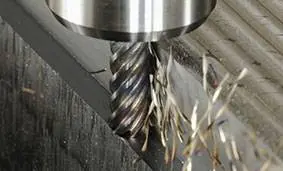
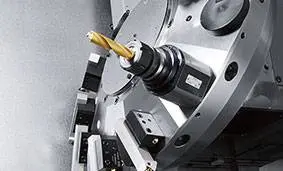
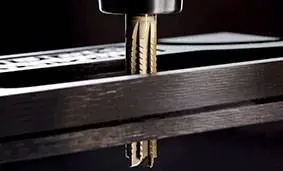
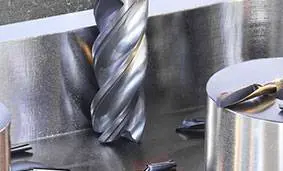
End Mill Holders Market research now available at Brand Essence Research encompasses an exhaustive Study of this business space with regards to pivotal industry drivers, market share analysis, and the latest trends characterizing the End Mill Holders industry landscape. This report also covers details of structural connection interfaces and mechanical runout limits.
Introduces the Fullcut Mill Contact Grip. With the addition of the Fullcut Radius Mill (FRM) and the Ball End Mill (BE), the Fullcut Mill Contact Grip series now features four connection sizes and seven cutter types. The contact grip is a threaded coupling system that achieves machining capacity matching solid cutters.
Optimized cutting geometries designed for the distinct mechanical requirements of major industries.
Milling titanium alloys (Ti-6Al-4V) and nickel-based superalloys (Inconel 718) requires high heat resistance. Our AlTiN and TiAlSiN coated end mills maintain their cutting edge at temperatures up to 1000°C. Optimized rake angles help manage work hardening in challenging aerospace materials.
High-volume automotive production relies on tool life and predictability. Our carbide drill bits and corner radius end mills are engineered for high-speed machining of aluminum battery packs, structural castings, and transmission components, maintaining dimensional stability across long cycles.
Machining hardened tool steels (HRC 50 to HRC 65) requires high wear resistance. Millcraft's micro-grain carbide ball nose end mills and corner radius cutters are designed for profiling and finishing operations in tough mold materials, helping reduce manual polishing requirements.
Technical guidance for tool selection, operation parameters, and production optimization.
Substrate grain size directly affects the balance between tool hardness and toughness. Coarse-grained substrates have lower hardness but higher impact resistance. Nano-grain and sub-micron substrates (under 0.6μm) increase hardness without losing toughness, which supports tool edge stability during high-speed machining of hard materials.
Coolant channels deliver pressurized fluid directly to the cutting zone, which aids chip evacuation, reduces friction, and lowers temperatures. This design prevents thermal shock and allows for higher feed rates and cutting speeds, particularly in deep-hole drilling applications.
Standard end mills have a constant helix angle that can cause resonant harmonics, leading to chatter and surface roughness. Variable helix angles (e.g., 35°/38°) change the timing of chip formation at the cutting edge, breaking up these harmonics to improve surface finish and extend tool life.
PVD coatings are thinner (1.5μm to 4μm) and follow tool edge geometries closely, preserving sharpness for precision milling and micro-machining. CVD coatings are thicker (5μm to 20μm) and offer higher thermal insulation, making them suitable for high-temperature turning and heavy roughing of abrasive cast irons.
To minimize work hardening, maintain a constant feed rate, avoid tool dwelling, and use sharp, positive rake angles. Deep axial cuts coupled with moderate radial engagements and adequate coolant delivery help transfer heat away from the workpiece via the chips.
Runout causes uneven load distribution among the cutting flutes, leading to premature wear or chipping on the overloaded teeth. Maintaining runout below 0.003mm helps balance the cutting forces, resulting in more consistent tool life and reduced stress on the machine spindle.
Yes, carbide tools can be reground on 5-axis CNC grinding machines to restore the cutting edge. A post-regrind coating is typically applied to restore performance. However, regrinding slightly reduces the tool diameter and chip pocket volume, which must be accounted for in the machine's offset parameters.
DLC coatings have a low coefficient of friction and high hardness. This combination prevents aluminum from welding to the cutting edge (Built-Up Edge, or BUE), allowing for clean chip evacuation and high-speed machining in non-ferrous materials.
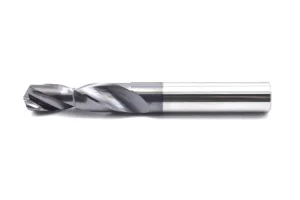
Our second series of high-performance cutting tools, featuring twist drills, reamers, and customized options.
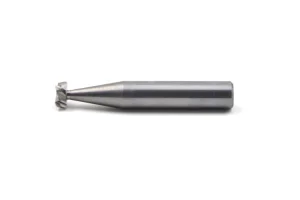
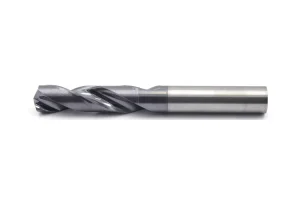
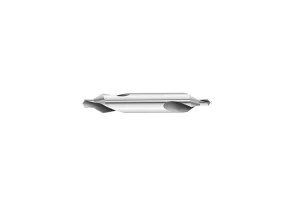
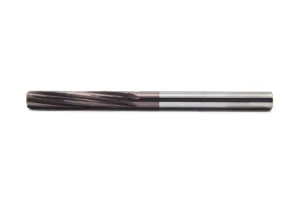
Connecting precision manufacturing systems with high-reliability carbide tooling solutions globally.