
Deploying sub-micron tungsten carbide substrate formulas and state-of-the-art coatings, our cutting tools offer extreme wear resistance and micro-machining accuracy.
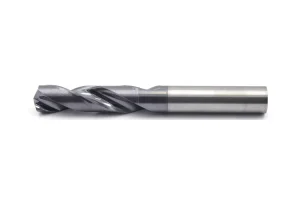
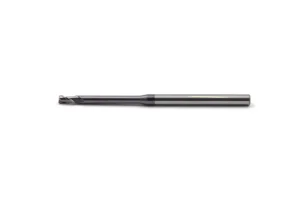
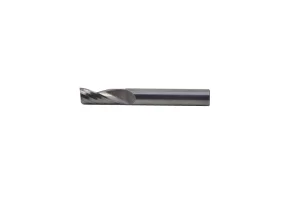
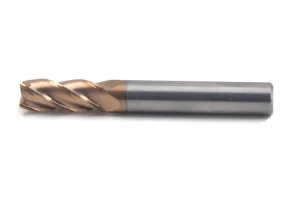
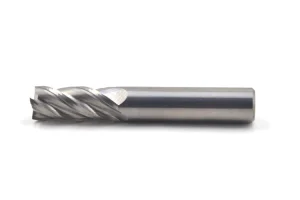
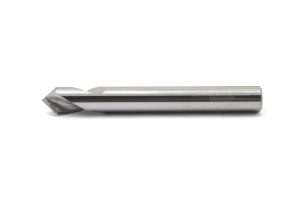
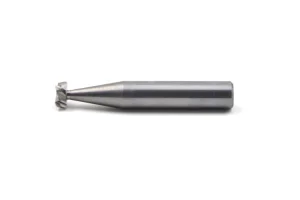
The global CNC machining market is expanding at an unprecedented rate, driven by advancements in aerospace technology, high-volume automotive production, complex electronic components, and advanced healthcare devices. At the heart of this manufacturing revolution lies the tooling matrix. High-performance solid carbide tooling has transitioned from a basic consumables category to a key strategic asset. Precision, durability, and predictability are the metrics by which global manufacturers measure their supply chains.
Historically, European and Japanese manufacturers dominated the high-end industrial cutting tool market. However, significant structural transitions have occurred. Through substantial investment in Swiss grinding engineering, German metrology systems, and top-tier micro-grain tungsten substrates, specialized Chinese manufacturers have closed the technical gap. Modern CNC tooling production in China is no longer about simple replication; it is defined by custom geometries, state-of-the-art physical vapor deposition (PVD) coatings, and rigorous Quality Assurance systems that meet or exceed global standards.
This paradigm shift has enabled factories worldwide to optimize their cost-per-part ratios. In high-speed machining (HSM) setups, a tool that maintains its cutting-edge integrity for even 15% longer can yield thousands of dollars in cumulative savings by minimizing machine downtime, reduction in tool changes, and securing surface finishes that bypass manual polishing steps.
True manufacturing authority in CNC tooling is determined by the machinery, measuring tools, and metallurgy employed in production. Millcraft Tools (Changzhou) Co., Ltd. represents the standard of precision tooling manufacturing. Strategically located in Changzhou's manufacturing hub, the company specializes in producing high-precision carbide tools, milling cutters, carbide drills, reamers, and customized boring cutters. The company's core strengths lie in high-performance micro end mills and high-accuracy carbide drills.
To eliminate variable micro-fracturing and secure absolute dimensional consistency, the facility relies on world-class CNC tool grinding systems and measuring devices:
Originating from Germany, Walter multi-axis tool grinding machines enable Millcraft to design and grind highly complex tool geometries. This infrastructure ensures exact consistency in helix angles, rake angles, and relief profiles across production runs of any volume.
Utilizing high-end Swiss grinding equipment allows Millcraft to manufacture micro-diameter end mills. These systems provide the thermal stability and structural rigidity required to produce tools with diameters as small as 0.1 mm, operating within sub-micron tolerances.
German Zoller measuring and inspection machines are used to verify and record every batch. With optical inspections measuring dimensional accuracy down to the nanometer scale, every tool leaves the factory floor fully validated and certified.
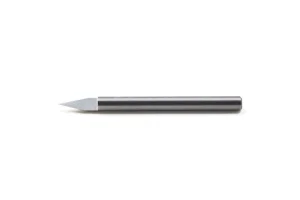
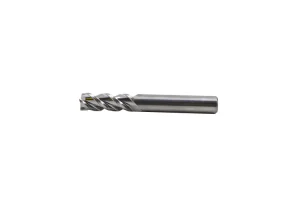
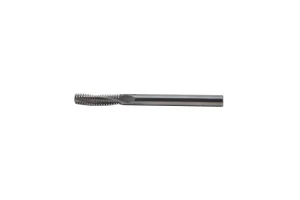
Our standardized and custom products are designed to deliver performance and efficiency in demanding metal cutting applications.
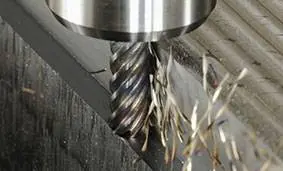
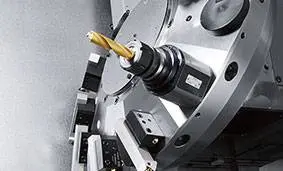
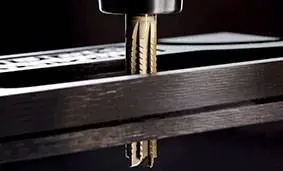
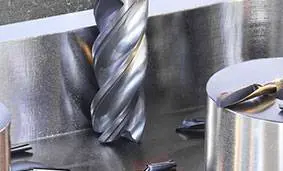
The performance of a CNC cutting tool is determined by its coating, tool geometry, and substrate material. Under the high-temperature conditions of high-speed machining, physical properties change rapidly. Without advanced engineering, premature tool wear, thermal cracking, and tool breakage occur.
Millcraft Tools utilizes sub-micron and ultra-fine grain tungsten carbide substrate powders mixed with cobalt (typically 10% to 12%). This composition balances hardness (wear resistance) and toughness (impact resistance). Micro-grain structures prevent micro-chipping on the cutting edge, which is essential for machining difficult materials like titanium alloys, Inconel, and hardened dies.
To address harmonic vibration during high-speed machining, Millcraft designs end mills with variable pitch and helix profiles. By varying the spacing between the flutes, harmonic frequencies are disrupted, reducing chatter. This design results in smoother finishes, improved dimensional accuracy, and extended spindle life for the CNC machine.
Modern coatings act as a thermal and physical barrier. Millcraft applies advanced PVD coatings tailored for specific materials:
Industrial CNC cutting tools are utilized across key manufacturing sectors, each demanding specific technical performance:
Machining complex parts from titanium (Ti-6Al-4V) and nickel-based superalloys requires high-accuracy carbide tools. Solid carbide twist drills with internal cooling channels and variable helix end mills prevent work hardening and manage heat effectively.
Mass-producing automotive parts demands long tool life and high reliability. Specialized custom combination tools, carbide reamers, and step drills perform multiple operations in a single cycle, reducing cycle times and optimizing cost-per-part.
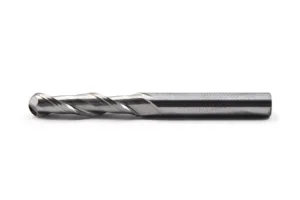
Creating complex molds requires long-reach neck geometries and ball-nose end mills. Millcraft's long-neck, short-flute end mills allow deep-cavity milling of hardened steels up to 60-65 HRC with minimal tool deflection.
Reliable global sourcing requires consistent tool performance and a secure supply chain. Millcraft Tools integrates manufacturing quality control with efficient export logistics to serve clients worldwide:
Every step of the manufacturing process, from raw carbide rods to finished, coated tools, undergoes strict quality checks. Laser measurement systems and Zoller inspection machines verify tool geometry, helix accuracy, and surface finish, ensuring each tool performs reliably out of the box.
Optimizing CNC performance requires matching tool geometry and coating to the specific workpiece. Millcraft provides engineering support, assisting clients with speed and feed calculations, tool selection, and custom tooling designs for complex machining tasks.
Located in the Changzhou industrial district, Millcraft has access to established logistics networks, enabling prompt shipping of standard catalog tools. With robust packaging to protect cutting edges, tools are delivered safely to international markets, including North America, Europe, and Southeast Asia.
As manufacturing evolves toward Industry 4.0 and smart automation, CNC tooling design is adapting to meet new demands. Future developments center on three main trends:
Future tooling systems will integrate sensors within tool holders to track vibration, temperature, and wear, allowing operators to optimize parameters in real time and prevent unexpected tool failures.
To reduce environmental impact and coolant costs, manufacturers are adopting dry machining or Minimum Quantity Lubrication (MQL). This transition requires tools with advanced coatings, like multilayer nanocomposites, capable of managing high thermal loads without coolant.
Combining 3D-printed tool bodies with solid carbide inserts allows for highly optimized internal cooling channels, improving heat dissipation in deep-cavity milling applications.
Stay informed on market developments, tooling innovations, and industry research:
This study covers the tooling accessory landscape, outlining the growth of toolholder configurations, balancing requirements for high-speed machining, and the adoption of modern heat-shrink systems globally.
Detailing modular connection technologies, this report outlines the development of indexable tool interfaces that maintain high rigidity and accuracy across modular milling setups.
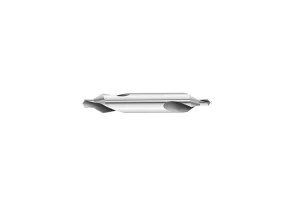
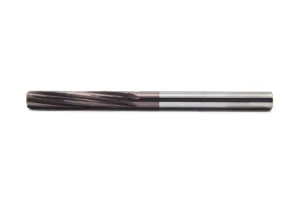
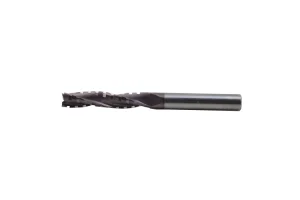
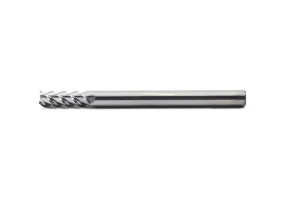
Explore our range of drills, reamers, and custom profile cutters designed for high-performance metal removal.

Contact our engineering team to discuss technical advice, material compatibility, and ordering options.