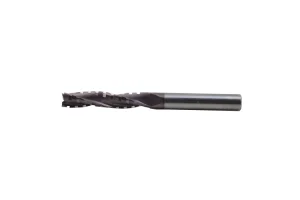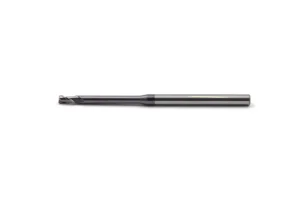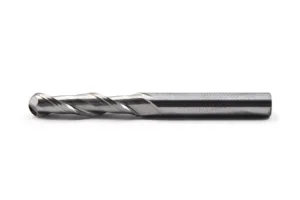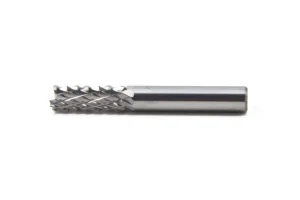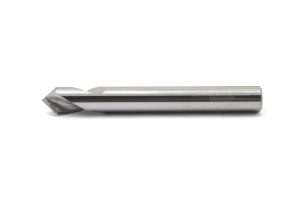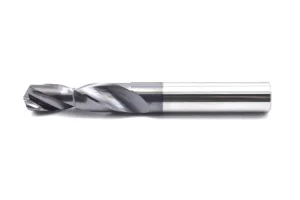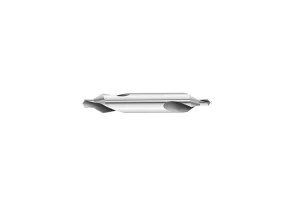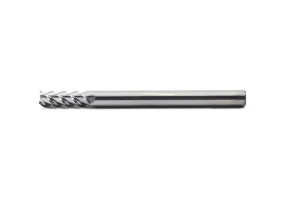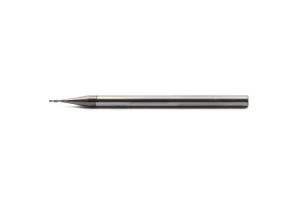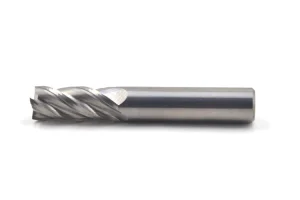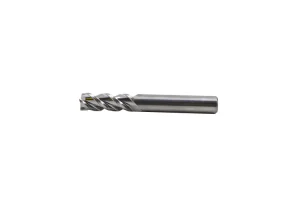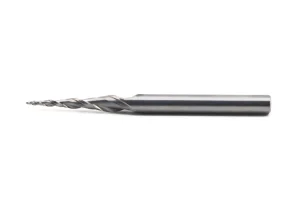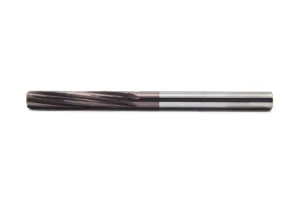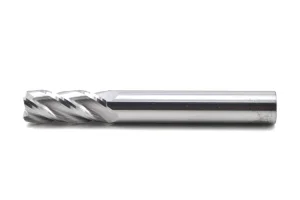
Explore our premium selection of sub-micron tungsten carbide cutting bits, optimized for extreme rigidity, rapid chip evacuation, and thermal resistance in deep slotting processes.
In the modern manufacturing landscape, the demand for precision machining of deep cavities and complex pockets has escalated exponentially. Industries such as aerospace, medical device manufacturing, automotive engineering, and semiconductor die fabrication require tooling solutions that can sustain heavy mechanical stress under extreme conditions. Among these components, the Deep Grooving End Mill Cutting Tool represents a critical pinnacle of engineering. As components shrink in size while growing in functional complexity, cutting tool manufacturers face the challenge of designing tools that balance slender geometries with structural rigidity.
Historically, deep grooving operations were prone to severe chatter, high deflection rates, and premature tool failure caused by poor chip evacuation. Traditional cutting geometries could not effectively extract work-hardened chips from narrow, deep pockets. This limitation forced operators to decrease feed speeds and depths of cut, significantly lowering machining productivity. Today, advanced metallurgy combined with custom-engineered geometries has enabled a new class of solid carbide end mills. These tools operate under high-velocity regimes while maintaining geometrical integrity across extended tool cycles, providing global manufacturers with lower total cost of ownership (TCO) and superior surface finishes.
High-mix, low-volume production paradigms require tooling systems capable of machining challenging materials, including titanium alloys, Inconel, and hardened tool steels, without frequent setups.
Transitioning to ultra-fine and nano-grain tungsten carbide substrates offers high hardness combined with improved fracture toughness, protecting critical cutting edges against thermal shock.
Applying specialized thin-film coatings, such as AlTiN, TiAlN, and silicon-doped nano-composite layers, minimizes heat transfer into the substrate and extends cutting tool life at high cutting speeds.
Achieving excellence in deep grooving operations requires strict manufacturing control. As an established manufacturer of high-precision cutting tools based in China, Millcraft Tools (Changzhou) Co., Ltd. has designed its production facility around advanced precision equipment. Deep neck geometries present design challenges due to high aspect ratios (length-to-diameter ratios). Minor discrepancies in flute concentricity, core thickness, or relief angle can lead to tool deflection and catastrophic breakage. To maintain tight tolerances, Millcraft has invested in high-end European grinding machinery, including Walter (Germany), TTB (Switzerland), and Joerg (Germany) CNC tool grinding machines.
These multi-axis CNC grinding systems feature active temperature control and high-precision clamping systems, keeping tool runout tolerances within 0.002mm. Precision machining requires similarly advanced inspection systems. The production facility utilizes Zoller Genius measuring centers to perform automated inspections of every tool parameter, including cutting edge prep, rake angles, helix angles, and surface roughness. This control system ensures that our high-precision carbide tools, milling cutters, carbide drills, reamers, and boring cutters maintain consistent performance throughout batch runs.
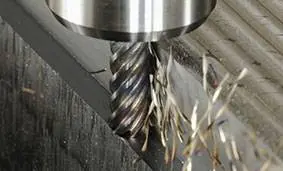
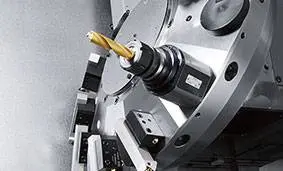
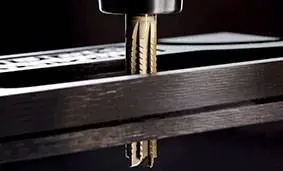
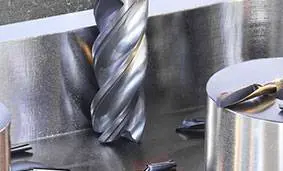
Standard end mills often experience structural deflection when extending deep into a pocket. To mitigate this deflection, our deep grooving tools feature a tapered core design. The core diameter gradually increases from the cutting tip toward the shank, providing high structural rigidity. This design counteracts lateral radial cutting forces and reduces vibration. Dynamic neck reliefs are ground on our TTB machines, providing necessary clearance while retaining maximum core mass near the shank junction.
When cutting deep slots, harmonics and vibration can compromise surface finish. Our tools feature variable helix angles and asymmetric index pitches. By varying the flute spacing and helix angles, we break up the uniform frequency of the cutting impacts. This variation disrupts chatter harmonics, stabilizing the machining process. This design allows operators to run higher feed rates and axial depths of cut, even in hard-to-machine materials.
Recutting chips inside a deep groove is a primary cause of micro-chipping and tool failure. Millcraft's tools are designed with polished, open flute basins that quickly move chips away from the cutting zone. High-volume chip pockets combined with optimized rake angles prevent chip packing. This design ensures that chips are cleanly ejected under minimum coolant pressures, preserving cutting edge geometry and thermal stability.
High-speed grooving in materials like AISI 304 stainless steel or Inconel 718 generates localized friction, with temperatures in the cutting zone often exceeding 800°C. In such thermal regimes, heat-induced deformation can compromise the cutting edge. To maintain edge toughness, we utilize sub-micron carbide substrates combined with multi-layer PVD coatings containing Titanium, Aluminum, and Silicon (TiAlSiN). This coating creates a protective, thermally stable oxide layer, allowing the tool to withstand elevated temperatures. The coating acts as a heat barrier, directing thermal energy into the chips rather than the tool core, protecting the substrate against thermal fatigue.
Additionally, tool holding concentricity is critical for long tool life. Using hydraulic or shrink-fit tool holders keeps runout minimal. If runout at the cutting tip exceeds 0.005mm, the load will distribute unevenly among the flutes, leading to premature wear. The combination of a balanced tool holder and our variable flute design ensures stable, reliable performance in deep slotting applications.
The industrial development of Xixiashu Town, Changzhou, China, has created a manufacturing cluster for high-precision cutting tools. This concentration of raw material suppliers, coating facilities, and specialized logistics providers enables Millcraft to optimize its manufacturing processes. By integrating this ecosystem with our advanced Walter and TTB machinery, we can manufacture custom and standard tools efficiently, maintaining high quality at competitive price points for global procurement managers.
Machining structural ribs, turbine discs, and pocket enclosures in aerospace titanium alloys requires deep slotting capabilities. Our tools are designed to maintain structural integrity under high radial loads in these deep pocketing operations.
Forging and injection molds require deep, narrow slots with vertical walls and precise corner radii. Our long-neck, short-flute end mills are designed to profile these deep cavities with low deflection, producing high-quality surface finishes that minimize secondary polishing.
Titanium orthopedic implants and surgical instruments require precise, micro-diameter tooling. Millcraft's micro-machining tools feature balanced geometries designed to produce clean cuts in bio-compatible materials.
Millcraft Tools (Changzhou) Co.,Ltd is a professional manufacturer of cutting tools. We are specialized in producing high precision carbide tools, milling cutters, carbide drills, reamers, boring cutter, ect. Our advantages are micro endmills and high quality carbide drills. We have “Walter”, “TTB” and “Joerg” machines and “Zoller” measuring devices. We manufacture our tooling solutions under ISO 9001 quality standards, serving manufacturers in the aerospace, automotive, die-mold, and medical industries.
Our complete line of solid carbide rotary tools, manufactured with European CNC grinding centers for consistent industrial performance.

Technical advice & order acceptance. Contact our engineering team for custom tool geometries and machining cycle assessments.