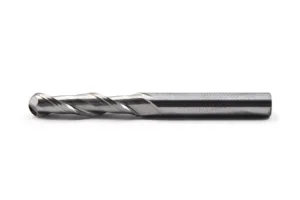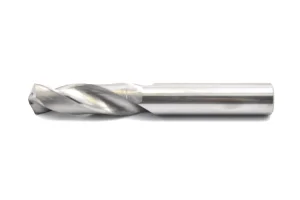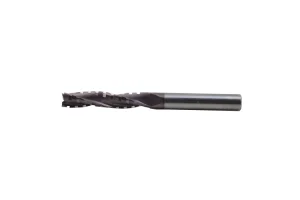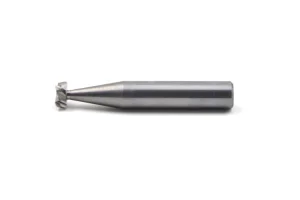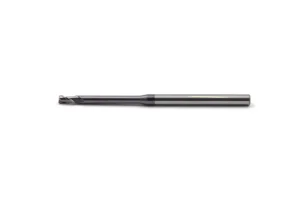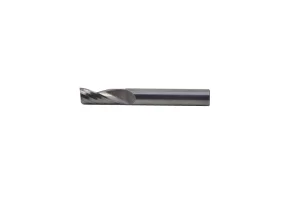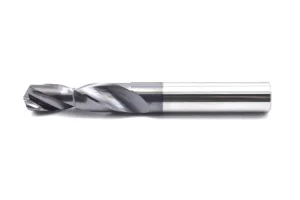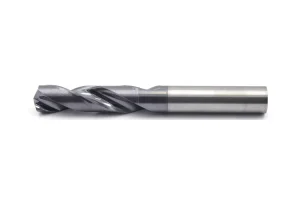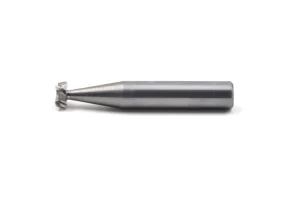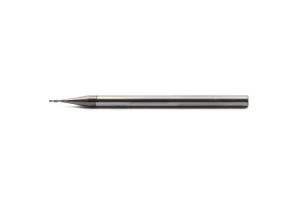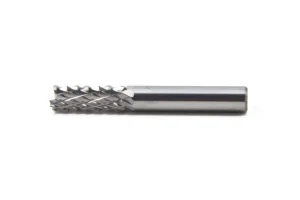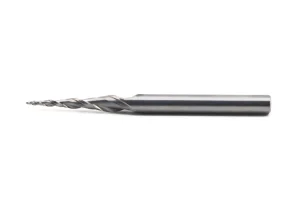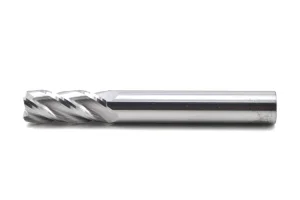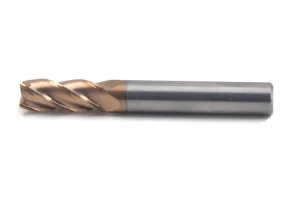
Discover our elite line of solid carbide rotary tools optimized for micro-machining, hardened steel profile cutting, and high-speed material removal.
The global manufacturing arena has entered an era of unprecedented dimensional precision and surface smoothness demands. Solid carbide ball nose end mills (often referred to as ball end mills or spherical cutters) represent a critical pillar in advanced subtracting manufacturing. Engineered with a semi-spherical cutting edge, these tools are indispensable for generating complex 3D profiles, contoured surfaces, dies, molds, and turbine blades. Industries such as aerospace, medical implants, automotive mold making, and electronic micro-components rely heavily on the geometric integrity of the ball nose to ensure high structural consistency and minimal post-machining hand polishing.
As materials like Titanium alloys (Ti-6Al-4V), Inconel, cobalt-chrome, and hardened tool steels (exceeding HRC 55) become standardized in critical components, the stress placed on cutting edges is astronomical. High-speed machining (HSM) and multi-axis CNC machines necessitate tools capable of enduring intense thermal load and mechanical wear. The global market is transitioning rapidly from standard grade sub-micron substrates to ultra-fine, nano-grain tungsten carbide formulations, designed to optimize toughness and prevent micro-chipping at high feed rates.
China has long established itself as a global epicentre for raw material extraction and processing of tungsten ore—the primary ingredient for tungsten carbide (WC). This vertical supply chain integration allows Chinese carbide tool factories to secure premium chemical-grade ammonium paratungstate (APT) and tungsten powder at competitive prices. However, the modern Chinese advantage extends far beyond material costs. Today's premier Chinese tooling facilities represent high-automation environments, heavily invested in European and Japanese multi-axis CNC grinding systems, including German Walter machines, Swiss TTB machines, and Swiss Joerg tool grinders.
By blending advanced metallurgy, advanced automated production, and top-tier inspection systems (such as German Zoller Genius measuring systems), Chinese suppliers achieve tolerances that directly rival traditional German, Swiss, or Japanese tooling giants at a fraction of the cost. Global manufacturing enterprises benefit from:
A tool's performance is a direct reflection of its substrate density and coating chemistry. High-quality carbide ball nose end mills feature a grain size classification of 0.2μm to 0.6μm (sub-micron to nano-grain). This fine structure ensures a uniform distribution of Cobalt (typically 10% to 12%), which acts as the binder matrix. The resulting balance between hardness (high tungsten carbide ratio) and fracture toughness (balanced Cobalt binder) enables the tool edge to resist deflections and cyclical impacts.
To further enhance tool life and heat resistance, advanced Physical Vapor Deposition (PVD) coatings are applied. These thin-film coatings act as thermal barriers, reducing heat transfer into the tool body and preventing premature thermal cracking:
| Coating Type | Chemical Composition | Oxidation Temp Limit (°C) | Microhardness (HV) | Best Application Field |
|---|---|---|---|---|
| AlTiN (Aluminum Titanium Nitride) | Al(x)Ti(1-x)N | 900°C | 3300 - 3500 | General alloy steel, dry machining, stainless steel |
| nACo (Nano-Composite) | Nc-AlTiN/a-Si3N4 | 1100°C | 4000 - 4500 | Hardened steels (up to HRC 65), aerospace superalloys |
| TiAlN (Titanium Aluminum Nitride) | Ti(x)Al(1-x)N | 800°C | 3000 - 3200 | Cast iron, general milling, medium carbon steel |
| DLC (Diamond-Like Carbon) | Carbon (Amorphous) | 450°C | 5000+ | Non-ferrous materials, aluminum, copper, carbon fiber |
In high-speed profile milling, harmonic vibration (chatter) is the primary enemy of tool life and surface finish. When milling deep pockets or high-walled molds, the tool shank is subject to deflection. Modern engineering solves this by implementing *Variable Helix Angles* (typically alternating between 35° and 38°) and *Unequal Index Pitching*. By altering the timing of the cutting edges contacting the workpiece, the harmonic vibration frequencies are disrupted, preventing resonant frequencies from building up.
Furthermore, the cutting edge of a premium ball nose cutter undergoes edge preparation, also known as honing or K-land treatment. The sharp edge is micro-brushed or blasted to form a controlled, radiused edge (typically 3 to 10 microns). This tiny rounding eliminates micro-fractures along the cutting edge, strengthening the tool during heavy radial cuts.
Carbide ball nose end mills are utilized across diverse localized setups, each demanding unique machining parameters:
Engineered to meet international machining standards, utilizing premier solid carbide substrates and advanced geometries.
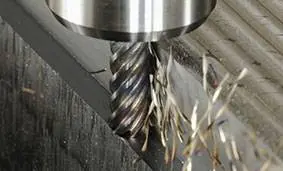
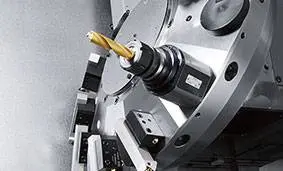
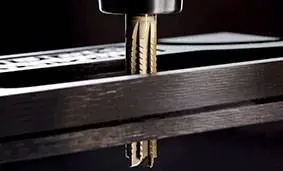
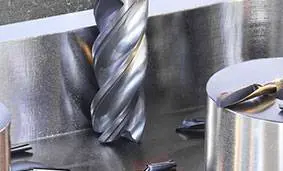
A look into Millcraft Tools' high-precision production environment, machining lines, and strategic partners.
Millcraft Tools (Changzhou) Co.,Ltd is a professional manufacturer of cutting tools. We are specialized in producing high precision carbide tools, milling cutters, carbide drills, reamers, boring cutter, ect. Our advantages are micro endmills and high quality carbide drills. We have "Walter", "TTB" and "Joerg" machines and "Zoller" measuring devices. Our commitment is to offer high-performance tooling solutions that allow our clients to optimize machine utilization, improve dimensional accuracy, and reduce product cycle times. Through continuous investment in research and development, we formulate customized designs for demanding applications in heavy machining and high-tech fabrication.
Stay updated with the latest technological reports, market forecast parameters, and modern tooling advancements.
Critical engineering answers regarding the deployment, optimization, and sourcing of Carbide Ball Nose tools.
A1: Selecting the optimal cutting speed involves balancing the hardness of the workpiece material, the tool coating, and the rigidity of the CNC machine setup. For instance, milling medium-carbon steel with an AlTiN-coated cutter allows for higher Vc speeds (150–220 m/min). Conversely, machining difficult Titanium alloys (Ti-6Al-4V) requires a lower speed (60–90 m/min) to prevent thermal overload. Consult our engineering team for precise speeds and feeds based on your exact material specs.
A2: Scallop height is the theoretical peak of unmachined material left between parallel passes of a ball nose end mill. It is calculated based on the tool radius and the step-over distance (Ae). A smaller step-over leads to a lower scallop height, resulting in a superior surface finish that requires minimal secondary hand-polishing or post-processing. Selecting the correct ball nose diameter is vital for controlling this value efficiently.
A3: 2-Flute ball nose cutters provide larger chip gullets, making them ideal for roughing, slotting, and soft/non-ferrous materials (like aluminum or plastics) where chip removal is critical. 4-Flute ball nose cutters feature a stronger core diameter and are preferred for finishing operations on harder steels (HRC 40+), as the increased tooth density enables higher feed rates and a smoother surface finish.
A4: Tool runout measures the deviation of the cutter axis from the spindle's rotation center. If runout exceeds 0.01mm, the chip load becomes unevenly distributed across the cutting teeth, causing rapid chipping, uneven tool wear, and poor surface finish. By keeping the runout to ≤0.003mm (our target standard), tool life is maximized and surface finish is significantly improved.
A5: We utilize a fully closed-loop quality management system. Production is carried out on Swiss TTB and German Walter CNC grinding machines, which feature integrated thermal stability sensors. Post-grinding, each batch of tools undergoes digital inspection using German Zoller Genius metrology systems. This allows us to trace, measure, and record the micro-geometry of every single tool, guaranteeing batch-to-batch consistency.
A6: For aerospace and medical clients, we provide specialized tool designs, including variable helix patterns, custom corner radii, internal coolant channels, tapered shanks, and specialized high-heat coatings like nACo or diamond-like carbon (DLC). Provide us with your component CAD file or drawings, and our tooling engineers will customize a layout tailored to your specific process parameters.
Explore our full selection of solid carbide tooling solutions, featuring specialized geometries for industrial machining.