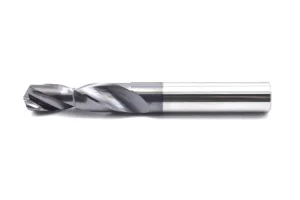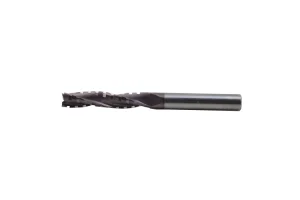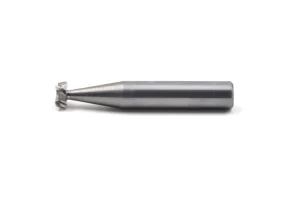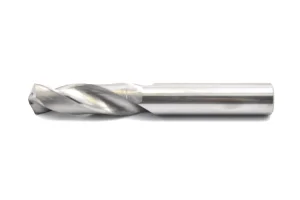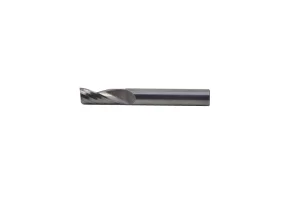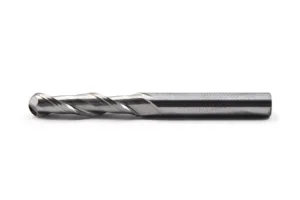
Best Sharpening Milling Cutter Factory & Supplier

Engineered High-Precision Solid Carbide Tools for High-Performance Industrial Metal Machining

Premium High-Precision Milling Cutters

Explore our top-recommended high-speed, durable solid carbide cutting tools optimized for CNC automation systems.
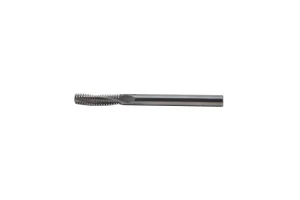
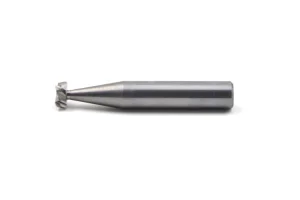
Best Solid Carbide Thread End Mill

Best Solid Carbide Thread End Mill

Verify Specifications
Top Carbide Customized Milling Cutter

Top Carbide Customized Milling Cutter

Verify Specifications
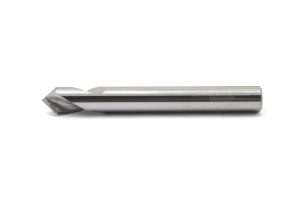
Carbide NC Spotting Drill Bits

Top Carbide NC Spotting Drill Bits

Verify Specifications
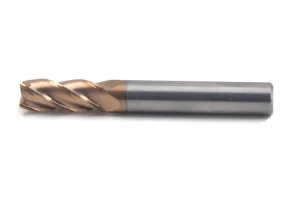
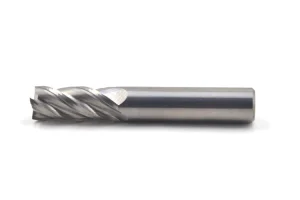
Best Solid Carbide 4 Flute Flat End Mill

Best Solid Carbide 4 Flute Flat End Mill

Verify Specifications
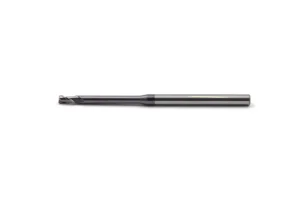
China Carbide Long Neck Short Flute End Mill

China Carbide Long Neck Short Flute End Mill

Verify Specifications
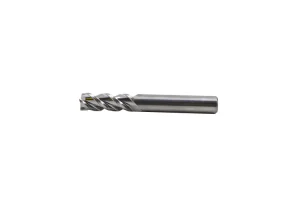
Best Solid Carbide Aluminum End Mill

Best Solid Carbide Aluminum End Mill

Verify Specifications
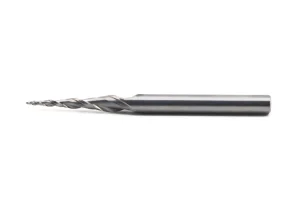
Carbide Taper End Mill Router Bit

Top Carbide Taper End Mill Router Bit

Verify Specifications
Solid Carbide 4F Flat End Mill

Top Solid Carbide 4F Flat End Mill

Verify Specifications
Industry Whitepaper Focus

Strategic Engineering Analysis: Optimization of Milling Cutter Sharpening in Modern Automated Machining

In the high-speed paradigm of contemporary subtractive manufacturing, the efficiency of rotating cutting tools directly dictates the profitability, precision, and cycle times of computer numerical control (CNC) machining centers. Milling cutters—specifically solid carbide end mills, reamers, and customized spotting drills—undergo intense mechanical and thermal stresses during chip formation. As the cutting edge degrades, cutting forces rise exponentially, yielding catastrophic risk of tool failure, workpiece deflection, and unacceptable surface roughness (Ra).

The decision to deploy a specialized Sharpening Milling Cutter Factory & Supplier is not merely a purchasing preference; it is a critical strategy to enhance tool life cycle management. Professional sharpening, performed via state-of-the-art 5-axis CNC grinding systems, restores the original geometries (including relief angles, rake angles, and helix configurations) to near-nominal dimensions, achieving up to 98% of the tool's original performance at a fraction of the replacement cost.

"Optimizing tool geometry through precision regrinding decreases spindle torque requirements, extends machine component lifespan, and secures structural integrity in complex tool paths."

1. The Materials Science: Sub-Micron Tungsten Carbide (WC-Co) Substrates

To manufacture tools that withstand high-load applications, industrial suppliers prioritize advanced metallurgical formulations. At Millcraft Tools, we construct our tooling portfolio using ultra-fine and sub-micron tungsten carbide grains bonded with balanced cobalt matrices (ranging from 8% to 12%). The grain size, often measuring under 0.6 microns, provides a high density of grain boundaries, significantly increasing transverse rupture strength (TRS) and hardness (HRA > 92).

Understanding the interplay between hardness (wear resistance) and toughness (chipping resistance) is vital for industrial procurement. During high-feed milling of hardened steel (>55 HRC), standard tool substrates degrade rapidly due to mechanical fatigue. High-grade carbide substrates ensure that when the cutting edge is resharpened, the structural integrity of the micro-edge remains intact without internal micro-cracks.

0.002mm
Grinding Runout
92+ HRA
Core Hardness
5-Axis
CNC Grinding
100%
Zoller Inspected

2. Macro-Level Industrial Solutions: Machine Tool Integration & Calibration

High-performance machining requires a systemic integration of the cutting tool, tool holder, spindle, and control system. High-precision tooling must maintain structural balance at high rotational velocities (up to 24,000 RPM or greater). Tools produced or refurbished on premium machinery like "Walter", "TTB", and "Joerg" CNC tool grinders feature exceptional concentricity, maintaining radial and axial runout within < 0.002 mm.

Furthermore, post-grinding inspection utilizing high-end measuring systems such as "Zoller" ensures that every variable helix, unequal index, and cutting edge radius conforms exactly to CAD models. This meticulous approach mitigates harmonic vibration (chatter), which is the primary cause of premature cutting tool failure and poor surface finish in deep pocket milling.

Quality Tools for Industrial Metal Cutting

Millcraft Tools (Changzhou) Co., Ltd: A leading manufacturer specializing in high-precision carbide tools, milling cutters, carbide drills, reamers, and custom tooling.
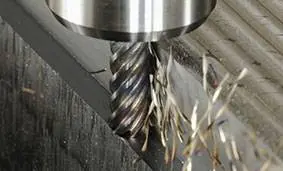
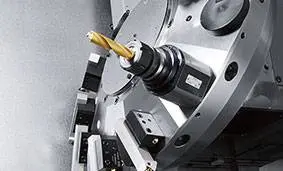
Carbide end mill (MCXD)

Carbide end mill (MCXD)

(square end mill) MCXD-S (ball nose end mill) MCXD-BN (corner radius end mill) MCXD-CR (Aluminum end mill) MCXD-A (Roughing end mill) MCXD-R
Carbide drill bit (MCZT)

Carbide drill bit (MCZT)

(Twist drill bit) MCZT-T (Drill bit with Inner coolant) MCZT-IC (Step drill bit) MCZT-S (center drill bit) MCZT-C (Nc spotting drill bit) MCZT-N
Carbide reamer (MCJD)

Carbide reamer (MCJD)

(straight flute reamer) MCJD-ST (spiral flute reamer) MCJD-SP
Customized (MCDZ)

Customized (MCDZ)

(CNC Engraving Tools) MCDZ-E (T-slot end mill) MCDZ-T (customized milling cutter) MCDZ

Millcraft Tools (Changzhou) Co., Ltd is a highly specialized professional manufacturer of advanced industrial cutting tools. Our competitive edge lies in the mass production of high-precision micro end mills, long-neck short-flute tools, and premium inner coolant carbide drills. Backed by German "Walter" and Swiss "TTB" five-axis grinding centers, alongside proprietary "Joerg" sharpening machinery and "Zoller" metrology stations, we guarantee sub-micron precision for automotive, aerospace, and precision mold manufacturers globally.

Enterprise Global Collaborations & Industrial Network References

To facilitate diverse corporate relations, digital media operations, and industrial networking, we acknowledge the support of our global web resource network:

Technical Roadmap & Trends

Global Procurement Analysis & High-Speed Cutting Trends

3. Evolving Global Procurement Strategies

Industrial procurement departments in Europe, North America, and Southeast Asia are increasingly moving away from low-cost, disposable tooling to focus on total cost-per-part optimization. High-value machining fields require predictable tool lifespans and certified repeatability. The procurement parameters of global enterprises focus on three core metrics:

Dimensional Traceability

Every tool batch must feature documented measurements detailing actual cutting diameters and runout tolerances to prevent machine crashes in unattended manufacturing shifts.

Edge Geometry Control

Honed edge preparation (micro-radius control of 5 to 15 microns) stabilizes the carbide cutting edge, preventing micro-chipping during initial engagement.

Sustainable Life Cycle

Procuring regrindable tools backed by a local or reliable supplier network reduces raw material footprint, aligning with global ISO 14001 corporate sustainability goals.

4. High-Performance Thin-Film Coatings: The Thermal Barrier

Modern milling cutters operate under extreme cutting speeds, where temperature at the cutting zone can exceed 800°C. Standard carbide substrates oxidize quickly under these conditions. Consequently, advanced physical vapor deposition (PVD) coatings are applied to act as thermal barriers:

  • Aluminum Titanium Nitride (AlTiN): Forms a protective aluminum oxide layer at high temperatures, making it suitable for dry machining of stainless steels and cast iron.
  • Titanium Silicon Nitride (TiSiN): Offers extreme surface microhardness (up to 38 GPa) to protect tooling from abrasive wear when machining hardened tool steels up to 60-65 HRC.
  • Silicon-doped Nano-Composite (nACo): Provides ultra-high toughness and thermal insulation, ideal for high-speed trochoidal milling of exotic alloys and nickel-based superalloys.

5. Future Outlook: Industry 4.0 and Smart Tooling Roadmap (2025–2030)

The manufacturing sector is entering a phase of deep digital integration. The next generation of sharpening milling cutter supplies will implement intelligent tracking mechanisms, including laser-etched data matrices or embedded RFID chips in tool shanks. This allows automated tool dispensers and CNC software to track real-time tool wear, the number of sharpening cycles, and precise feed/speed history.

Additionally, sustainable "Green Grinding" initiatives are transforming production lines. This includes closed-loop filtration for oil and water coolants, combined with high-efficiency recycling of valuable tungsten carbide sludges. These eco-friendly practices ensure both regulatory compliance and long-term price stability against fluctuations in global tungsten markets.

Expert Q&A: Tool Selection, Maintenance, and Performance Optimization

In-depth technical answers addressing core concerns of procurement specialists and CNC machining engineers.

Q1: What parameters differentiate premium industrial milling cutter sharpening from standard grinding? +
Premium sharpening utilizes high-stability 5-axis CNC grinding systems (like Walter and TTB) with high-density oil cooling to prevent thermal shock to the carbide substrate. It restores not only the clearance angle but also the exact helical progression, eccentric relief, and micro-honed edge preparation (usually 5 to 15 µm). Standard grinding often ignores edge preparation, causing micro-chipping on initial contact.
Q2: How does carbide grain size impact milling cutter performance? +
Sub-micron and ultra-fine grain carbide substrates provide a significantly higher density of tungsten carbide particles. This raises both structural hardness and transverse rupture strength. Tools with smaller grain structures hold a sharper edge longer and exhibit higher resistance to mechanical wear when cutting abrasive materials like aluminum-silicon alloys or fiber-reinforced plastics.
Q3: Why are unequal indexing and variable helix angles critical in high-feed milling? +
They break up harmonic frequencies during cutting. Standard symmetric cutters generate rhythmic vibrations that match the natural frequency of the spindle, causing severe chatter. Variable helix and unequal flute spacing alter the contact intervals of the cutting edges with the material, suppressing vibrations, enhancing surface finish, and significantly extending tool and spindle bearing life.
Q4: When should a milling cutter be resharpened rather than replaced? +
A cutter should ideally be pulled for sharpening when flank wear reaches approximately 0.2 mm to 0.3 mm, or before major chipping occurs. Waiting until tool failure increases the grinding depth required to restore the geometry, reducing the total number of regrinds possible. A properly managed tool can be resharpened 3 to 6 times.
Q5: Which coating is recommended for dry machining of hardened tool steels? +
For hardened steel (50 to 65 HRC), TiSiN or nACo coatings are highly recommended. These coatings maintain chemical stability and hardness at extreme thermal thresholds (up to 1100°C) and form a protective surface layer that prevents heat from transferring into the underlying carbide substrate.
Q6: How does Millcraft verify tool concentricity and dimensional tolerance? +
We use high-precision Zoller measuring machines to verify all finished tools. These non-contact optical inspection stations measure tool runout, outer diameter, flute depth, and edge radius with micron-level repeatability, generating comprehensive measurement protocols for quality assurance.
Q7: What are the advantages of solid carbide tools with inner coolant channels? +
Inner coolant channels deliver high-pressure fluid directly to the cutting zone. This optimizes chip evacuation, prevents thermal shocks, reduces heat-affected zones, and prevents chip re-cutting. It is crucial for deep pocket milling and drilling of sticky materials like stainless steel and titanium alloys.
Q8: How does tool runout affect the surface quality of the workpiece? +
Runout causes uneven load distribution among the flutes, where one flute cuts deeper than the others. This leads to accelerated wear on the overloaded tooth, dimensional inaccuracies, and chatter marks on the workpiece. Maintaining runout below 0.005 mm is essential for precision finish milling.

Industrial Drilling & Special Machining Tools

Browse our precision twist drills, step drills, spiral fluted reamers, and roughing cutters engineered for extreme production environments.
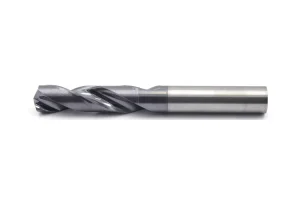
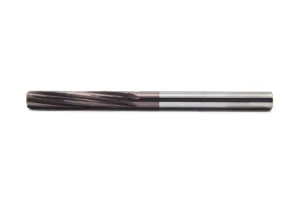
Best Solid Carbide Twist Drill Bits

Best Solid Carbide Twist Drill Bits

Verify Specifications
Best Carbide Spiral Flute Reamers

Best Carbide Spiral Flute Reamers

Verify Specifications
Top Solid Carbide Step Drill Bits

Top Solid Carbide Step Drill Bits

Verify Specifications
Best Carbide Roughing End Mill Router Bit

Best Carbide Roughing End Mill Router Bit

Verify Specifications
Best Carbide T-slot Milling Cutter

Best Carbide T-slot Milling Cutter

Verify Specifications
Best Drill Bits With Inner Coolant

Best Drill Bits With Inner Coolant

Verify Specifications
Top Solid Carbide Single Flute End Mill

Top Solid Carbide Single Flute End Mill

Verify Specifications
Top Carbide 2F Ball Nose End Mill

Top Carbide 2F Ball Nose End Mill

Verify Specifications

Contact Millcraft Tools

Get in touch with our technical sales engineers for customized tool design, sharpening services, or volume procurement quotes.

Technical Support Cover Image

Request expert technical advice and customized tool order validation

Subscribe & Connect