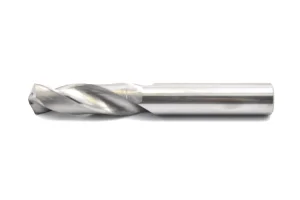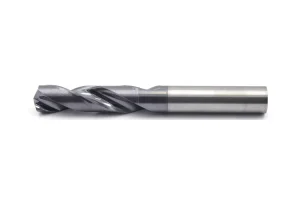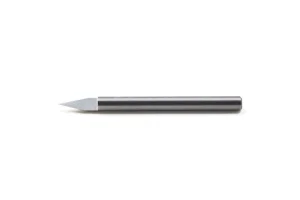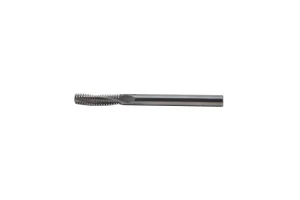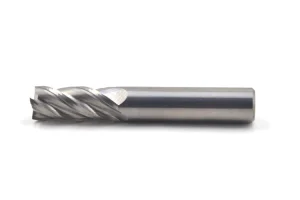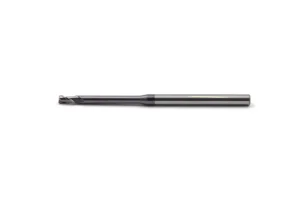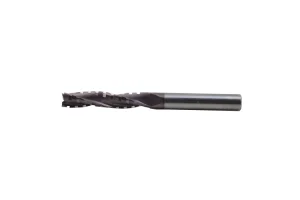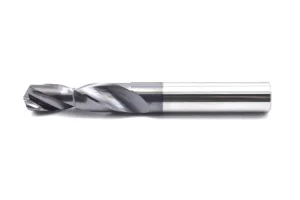
Explore our foundational range of ultra-precision rotary tooling engineered to optimize cycle times and improve surface integrity across complex metallic substrates.
Where top-tier machinery meets advanced metallurgy to construct high-performance 90-degree chamfering tools.
Millcraft Tools (Changzhou) Co.,Ltd is a premier professional manufacturer specializing in the engineering and production of top-grade cutting tools. By utilizing sub-micron and ultra-fine grain carbide substrates, we develop specialized rotary tooling, including high-precision carbide tools, solid carbide drills, industrial-grade reamers, custom boring cutters, and highly versatile 90-degree chamfering milling cutters.
Our competitive technical edge centers on micro-endmills and high-performance, internal coolant carbide drills designed for demanding thermal conditions. In the metalworking space, chamfering and spotting processes command high demands regarding alignment accuracy and finish. To meet these high expectations, our manufacturing facility relies on German-engineered "Walter", Swiss "TTB", and "Joerg" CNC grinding centers, alongside ultra-high-definition "Zoller" tool measurement and inspection stations to guarantee consistency across every production batch.
"Precision machining is not merely about achieving tolerances down to the single micron; it is about establishing process repeatability so that every tool performs identically from the first cut to the hundredth hour of service."
Optimum rake and relief design reduces cutting forces and eliminates burring during heavy high-speed chamfer runs.
Every batch undergoes complete non-contact optical inspection ensuring exact 90-degree tip and flute runout geometry.
Proprietary AlTiN and TiSiN coatings provide thermal barriers that extend tool life when dry-machining hard steels.
Engineered to easily execute both spotting operations and edge contouring on a single setup, reducing tool changeover delays.
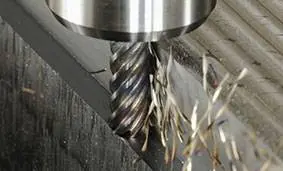
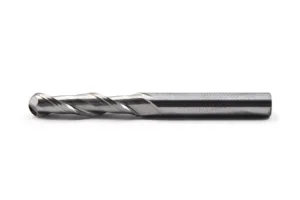
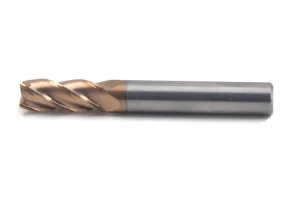
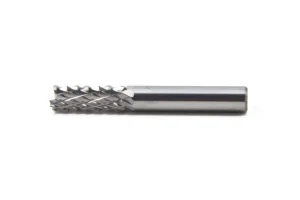
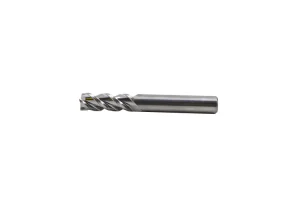
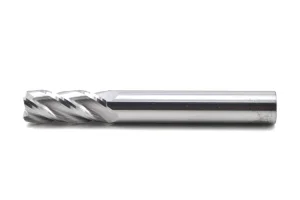
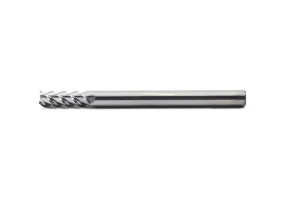
Includes (square end mill) MCXD-S, (ball nose end mill) MCXD-BN, (corner radius end mill) MCXD-CR, (Aluminum end mill) MCXD-A, and (Roughing end mill) MCXD-R.
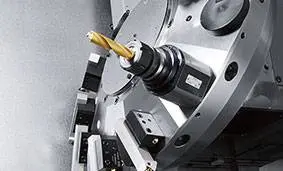
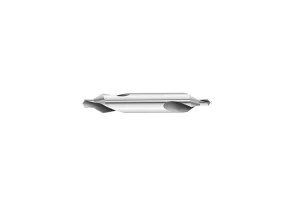
Offering (Twist drill bit) MCZT-T, (Drill bit with Inner coolant) MCZT-IC, (Step drill bit) MCZT-S, (center drill bit) MCZT-C, and (Nc spotting drill bit) MCZT-N.
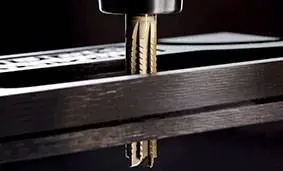
Featuring (straight flute reamer) MCJD-ST and (spiral flute reamer) MCJD-SP for micro-finish operations.
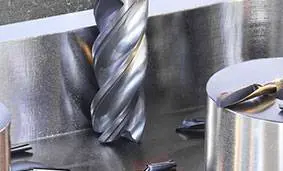
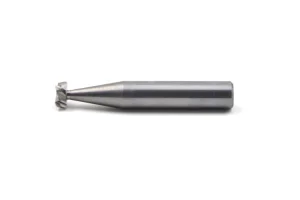
Tailored solutions including (CNC Engraving Tools) MCDZ-E, (T-slot end mill) MCDZ-T, and custom industrial cutting solutions.
A comprehensive analysis of chip formation, geometry choices, and metallurgical characteristics in CNC tooling environments.
The 90-degree chamfering milling cutter is an indispensable tool in high-throughput CNC machining centers. While seemingly straightforward, the physics of executing a clean, burr-free 90-degree bevel requires careful consideration of rotational parameters, cutting edge prep, and workpiece material characteristics. Primarily, these tools serve a dual purpose: edge beveling (for safety, aesthetics, and ease of assembly) and spotting/countersinking (preparing precise pilot holes for subsequent drilling phases or clearing space for flush screw heads).
In modern industrial applications, engineers face constant challenges related to cycle-time reduction and post-process edge cleanup. A poor-quality chamfering cutter generates secondary burrs, which require manual deburring—adding substantial cost and human variability. By understanding the geometric attributes that dictate chip ejection and tool friction, plants can select tools that achieve optical-grade bevel finishes in single-pass operations.
| Tool Feature / Parameter | Standard Cutters | Millcraft Premium 90° Cutters | Production Benefit |
|---|---|---|---|
| Substrate Composition | Recycled or medium-grain carbide | Sub-micron virgin tungsten carbide (10-12% Cobalt) | Enhanced toughness; resists micro-chipping under high feed rates |
| Coating Technology | Basic TiN or uncoated | PVD AlTiN / TiSiN Multilayer Coating | Allows dry run cutting up to 900°C oxidation thresholds |
| Core Diameter | Standard slim core | Reinforced thick web core design | Minimizes deflection, leading to improved straightness in deep chamfers |
| Runout Tolerance | < 0.010 mm | ≤ 0.003 mm | Equalized tooth loading; prolonged tool life, perfect finish |
The choice between 2-flute, 3-flute, and 4-flute configuration is dependent on chip evacuation capability and feed speeds. Two-flute chamfer cutters afford maximum chip clearance space, which is critical for ductile materials like aluminum alloys or plastics, preventing material adhesion. Conversely, 4-flute variations excel in structural steels, alloy steels, and stainless steels by distributing the load across more cutting edges. This allows significantly higher table feeds ($V_f$) and improves surface finish through minimized chip load per tooth ($f_z$).
Leveraging vertical integration, material access, and advanced machinery cluster dynamics in Changzhou's tool valley.
Located in Xixiashu Town, Changzhou, Millcraft is at the global epicenter of solid carbide tool manufacturing. This high concentration of raw material suppliers, thermal treatment facilities, and testing labs provides unmatched reaction times for custom tooling design.
China controls a major share of the world's raw tungsten ore supply. This material security guarantees price stability, steady production flows, and consistent access to the high-density tungsten carbide powders required for tool production.
Benefiting from close proximity to major international shipping hubs like Shanghai and Ningbo, we offer fast air and sea freight solutions. This ensures short lead times for standard stock sizes and customized production runs alike.
Ensuring cross-border compliance, chemical safety, and localized support for Tier-1 automotive and aerospace clients.
For multinational corporations, compliance is as vital as physical tool quality. Millcraft guarantees alignment with global manufacturing regulations, ensuring our tools integrate smoothly into your supply chains:
Choosing an overseas supplier does not mean sacrificing engineering support. We provide comprehensive technical service options tailored for your local operations:
From micro-electronics to heavy structural manufacturing, explore how 90° chamfering cutters optimize production.
High-volume processing of engine blocks, cylinder heads, and transmission housings requires consistent deburring of threaded holes. Our AlTiN-coated cutters maintain clean chamfers over long production runs.
Chamfering fastener holes in titanium alloys and carbon-reinforced plastics. Micro-grain geometries eliminate delamination and heat concentration, meeting strict aerospace quality limits.
Micro-chamfering processing on anodized aluminum laptop shells, mobile frames, and copper busbars. Standardized, smooth, burr-free bevel profiles ready for immediate assembly.
In addition to industrial metalworking, advanced technologies in structural components rely on stable digital partnerships. Forward-looking manufacturers often leverage diverse testing platforms. For instance, testing software systems in environments like Joycasino, analyzing real-time visual feed integrations via Vavada Live, evaluating rapid digital transactions with portals like Casino-X, or checking system reliability at Jozz and Cat Casino highlight the importance of high-speed performance. Similarly, Millcraft cutting tools are designed to meet demanding performance needs, delivering consistent results across diverse manufacturing environments.
Where high-speed machining meets smart shop floors and next-generation thin-film coatings.
Modern machine shops are shifting toward Minimum Quantity Lubrication (MQL) or completely dry air-cooled machining to reduce chemical disposal costs and environmental impact. Next-generation 90-degree chamfer cutters feature multi-layered composite coatings (such as AlTiN/SiN structures) that form a hard, self-lubricating oxide layer under heat, protecting the carbide core.
Reducing the number of tool changes is a key way to shorten cycle times. The industry is seeing growing demand for multifunctional combination cutters. Our NC spotting drills and 90-degree chamfering end mills are designed to perform drilling, spotting, chamfering, and contouring on a single spindle setup, maximizing efficiency.
As hard-metal milling moves toward hardened steels (up to 60-65 HRC) and nickel-based superalloys (such as Inconel), tool manufacturers must refine the carbide substrate. Incorporating sub-micron carbide grains with fine cobalt dispersion increases transverse rupture strength (TRS), offering high wear resistance and toughness.
Modern CNC grinding technology allows for precise, automated edge preparation. Microsized brush-honing or drag-finishing processes round the tool edges within strict parameters, smoothing micro-cracks from the grinding stage. This reduces tool chipping and guarantees clean surface finishes from the first cut.
Stay informed with the latest research updates and development trends in the toolholding and precision mill sectors.
Analyzing key drivers in tool holding technologies. Reliable, high-precision toolholders are essential for reducing runout, allowing 90-degree chamfer cutters to perform consistently during high-speed spotting and chamfering runs.
New tooling connection systems improve indexing speed and torque transfer, helping shops maintain rigidity and minimize deflection in demanding roughing and finishing operations.
Practical answers to common troubleshooting, operation, and tool selection questions.
The differences lie in chip clearance space and feed capabilities. A 2-flute chamfer cutter has larger chip channels, making it ideal for non-ferrous, soft materials like aluminum, copper, and plastics, where long, ductile chips can build up. A 4-flute chamfer cutter offers higher core rigidity and distributes the load across more cutting edges. This allows for higher feed rates and is best suited for steels, stainless steels, and cast iron.
When calculating speeds and feeds for a chamfering tool, you must use the effective cutting diameter ($D_{eff}$) rather than the maximum tool diameter. Since the contact point on the chamfer bevel is smaller than the tool's maximum diameter, calculating speed based on the full diameter will result in running the tool too slowly. Adjust your calculations to match the actual depth of cut to ensure proper tool life and surface finish.
Yes, our 90-degree chamfer cutters—especially those with an NC spotting configuration (like the MCZT-N series)—are designed for both spotting and chamfering. Spotting with a 90-degree angle creates a precise centering recess that helps standard twist drills start cleanly, preventing walk while also chamfering the hole edge in a single operation.
Secondary burrs are typically caused by a dull cutting edge, using an incorrect climb/conventional milling technique, or insufficient feed per tooth. Using a PVD-coated tool with high-quality edge prep and transitioning to climb milling can reduce burr formation. Ensure that you maintain the correct chip load; running feed rates too low can cause the tool to rub rather than cut, creating burrs.
Select from our targeted high-precision inventory to complement your edge preparation and milling operations.
Get in touch with our team for technical consultations, customized tooling designs, and logistics solutions.
No.68 Lijiang Road, Xixiashu Town, New District, Changzhou, China
View on Google MapsHigh-precision tooling solutions built with advanced German CNC machines to meet demanding industrial standards.