
China Best TiAlN Coating Round Nose End Mill Manufacturer

Time:2026-11-16 Author:Mason
0%

A China-based manufacturer of Tialn Coating Round Nose End Mill tools must offer more than a polished catalogue. Buyers need a cutter suited to the workpiece, machine, and finishing target. The rounded tip helps machine contoured surfaces, molds, and curved transitions. TiAlN can support performance under elevated cutting temperatures, but it is not a universal solution. Tool life still depends on substrate quality, edge preparation, flute geometry, runout, and cutting conditions. Small details matter. A faint vibration at the spindle can leave visible marks across a curved wall.

For this introduction, fictional tooling specialist Dr. Lin Wei offers an illustrative—not independently verified—rule: “A coating cannot rescue the wrong geometry; match the edge to the cut first.” That distinction matters when comparing suppliers. Ask for dimensional tolerances, coating specifications, inspection practices, and guidance for your material and operation. Check whether the recommended speed and feed account for tool diameter, engagement, and machine rigidity. A clear answer is more useful than a broad promise of longer life. Even a well-made cutter can disappoint when coolant delivery or chip evacuation is poor. Manufacturers should explain those limits plainly. This guide examines the features, applications, and supplier checks that help buyers assess a China Best TiAlN Coating Round Nose End Mill Manufacturer. Specifications deserve scrutiny. So does practical support. A few points may need trial cuts; real machining conditions rarely match a catalogue perfectly.
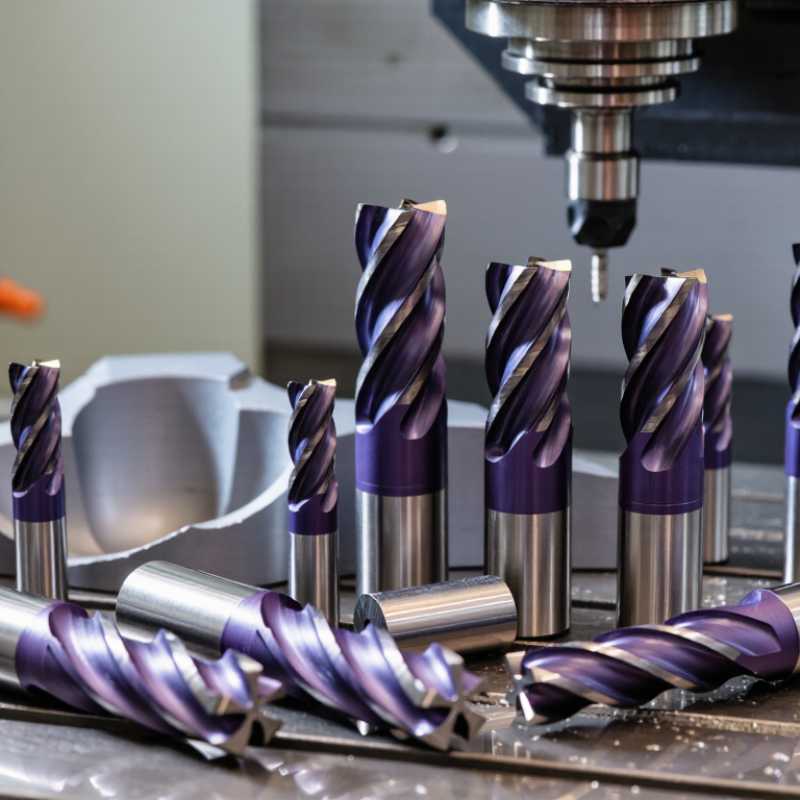
China Best TiAlN Coating Round Nose End Mill Manufacturer

What Is a TiAlN-Coated Round Nose End Mill?

China Best TiAlN Coating Round Nose End Mill Manufacturer

What Is a TiAlN-Coated Round Nose End Mill?

A TiAlN-coated round nose end mill is a cutting tool with a rounded tip and a titanium aluminum nitride surface layer. The curved end leaves a smooth radius instead of a sharp internal corner. This shape is useful for 3D profiles, mold cavities, and contoured surfaces. The coating can improve resistance to heat and wear, especially during demanding machining. It is not a cure-all.

Tool performance also depends on the carbide substrate, flute design, cutting speed, and workpiece material. In a shop, a rounded end can reduce corner stress when finishing curved features, but poor toolpath planning may still leave visible steps. TiAlN’s dark surface can make wear marks harder to judge by sight alone. Check the cutting edge under good lighting, and compare tool life under consistent conditions. Results vary, and coating alone does not guarantee a better finish.

Tips: Match the corner radius to the part drawing. Use stable clamping and avoid excessive tool overhang. Check the maker’s cutting data before setting speed and feed. A small test cut can reveal chatter or heat buildup early.

How Round Nose Geometry Supports Machining

Round-nose geometry supports machining by easing the transition between the tool’s side and end edges. This rounded corner spreads cutting forces across a broader contact area than a sharp square corner. In practice, that can reduce corner chipping and leave smoother blended surfaces on curved walls. It is not a cure-all; excessive engagement can still cause chatter or heat.

A simple geometry estimate shows why the nose radius matters. With a 1.0 mm corner radius and 0.10 mm feed per tooth, the idealized cusp height is about 1.25 μm, using h ≈ f²/(8r). Actual finish varies with runout, material, tool wear, and machine rigidity. ISO 8688-2:1989, the end-milling tool-life test standard, supports controlled comparisons; it does not promise one universal tool-life figure. Small details matter.

Tips: Use a light radial engagement on thin walls, then inspect the edge under magnification. Record feed, speed, and wear after each trial. The first result may look good, but repeatability is the real test.

How TiAlN Coating Affects Tool Performance

China Best TiAlN Coating Round Nose End Mill Manufacturer

How TiAlN Coating Affects Tool Performance

TiAlN helps a round nose end mill manage heat and wear during demanding cuts. At elevated temperatures, its aluminum-rich surface can form an oxide layer that slows further oxidation.

Klocke’s Manufacturing Processes 1: Cutting (2011) places TiAlN’s oxidation resistance at approximately 800°C. That is a material benchmark, not a safe cutting-temperature limit. The cutting edge experiences changing, localized heat as each flute enters and leaves the workpiece.

In practice, the coating can support longer tool life in dry or high-speed machining, especially when cutting tough alloys. But coating alone cannot prevent chipping. A round nose end mill needs a stable setup, suitable feed, and effective chip evacuation; a vibrating tool may fail early despite its coating.

ISO 8688-2:1989 sets out tool-life testing procedures for end milling, helping compare performance under controlled conditions. Test results still depend on workpiece material and cutting conditions.

I would treat any life estimate as a starting point, not a promise. A small trial cut can reveal built-up edge, uneven wear, or a rough finish before a full production run.

How Chinese Manufacturers Produce These End Mills

Producing a TiAlN-coated round nose end mill begins with selecting a carbide blank suited to the intended cutting load. The blank is ground into flutes, a rounded tip, and a shank. CNC grinding controls the ball radius and cutting geometry, but toolmakers still need to check wheel wear. A small change can affect the finished profile. Edges may receive light honing before cleaning and coating.

Tips: Check the tool drawing, radius, and flute count before ordering. Ask how runout and coating thickness are inspected. These details matter.

Before TiAlN deposition, manufacturers clean the tool to remove oil and fine grinding residue. The coating is commonly applied through a physical vapor deposition process in a controlled chamber. Temperature and surface preparation can influence adhesion, so coating is not a substitute for sound grinding. Afterward, inspection may include dimensional checks, visual review, and sample cutting. A measurement can pass while a real cut still chatters; matching the tool to the work material and machine remains important.

China Best TiAlN Coating Round Nose End Mill Manufacturer - How Chinese Manufacturers Produce These End Mills

Category Dimension or Production Stage Typical Data or Practice Technical Notes
Product and Material Characteristics
Tool type Round nose (corner-radius) end mill Solid-carbide cutting tool with a defined corner radius The rounded corner helps reduce sharp-edge chipping and produces a radiused transition. It is not the same geometry as a ball nose end mill.
Cutting material Cemented carbide Commonly made from tungsten carbide grains bonded with cobalt; many grades use approximately 6–12 wt% cobalt Exact composition and grain size vary with the intended balance of hardness, toughness, and wear resistance.
Flute count Number of cutting edges Common configurations include 2, 3, 4, and 6 flutes Fewer flutes can provide more chip space; more flutes may suit finishing and higher-feed applications when chip evacuation is adequate.
Helix angle Flute helix Approximately 30°–45° is common for general-purpose designs Actual geometry depends on the workpiece material, tool diameter, and cutting strategy.
Corner radius Cutting-edge radius Specified by the tool drawing; common catalog sizes range from a few tenths of a millimeter to several millimeters The radius is selected to match the component feature and should be confirmed against the tool drawing before ordering.
TiAlN coating Physical vapor deposition (PVD) coating A typical coating thickness is about 2–4 μm Thickness, composition, and coating properties vary by coating system and application. TiAlN is commonly selected for wear and heat resistance.
Shank tolerance Tool shank diameter Precision tools may use an h6 shank tolerance The specified tolerance must be checked on the product drawing or inspection report; it is not universal across all tools.
Tool diameter range Cutting diameter Available sizes depend on the product range and drawing; small-diameter tools may start below 1 mm, while larger sizes extend to tens of millimeters Diameter, overall length, flute length, and corner radius should be specified together for a custom tool.
Typical Manufacturing Process
1. Powder preparation Carbide raw-material preparation Tungsten carbide powder and a metallic binder, commonly cobalt, are proportioned, mixed, and milled Powder selection and mixing influence the consistency and mechanical properties of the finished carbide.
2. Forming and sintering Blank production The powder mixture is compacted into blanks and sintered in a controlled furnace Sintering consolidates the carbide into a dense material. Furnace conditions depend on the carbide grade and production process.
3. Blank preparation Blank sizing and straightening Sintered rods or blanks are cut to length and prepared for tool grinding Blank diameter, straightness, and length provide the starting dimensions for later operations.
4. CNC grinding Flutes and tool geometry CNC tool grinders form the cutting diameter, flutes, end geometry, and corner radius Grinding programs are selected according to the tool drawing and required cutting geometry.
5. Edge preparation Cutting-edge conditioning Edges may be honed or otherwise conditioned to a specified edge preparation Edge preparation is controlled to support the intended balance of sharpness and edge strength.
6. Cleaning and coating TiAlN PVD deposition Tools are cleaned before coating and processed in a PVD chamber under controlled conditions Surface cleanliness and process control affect coating adhesion and consistency. Coating may be applied after grinding and edge preparation.
7. Final inspection Dimensional and surface checks Inspection may cover cutting diameter, shank diameter, overall length, corner radius, runout, and coating appearance Measured items and acceptance limits should be agreed in the drawing or purchase specification.
8. Protection and packing Finished-tool handling Finished tools are protected from impact and contamination and packed for storage or shipment Packaging should protect cutting edges and keep tools identifiable by size and specification.

Note: Values shown are typical industry ranges or common practices, not guaranteed specifications for every tool. Confirm dimensions, tolerances, carbide grade, coating details, and inspection requirements against the approved product drawing.

How to Evaluate a Manufacturer for Your Application

A capable TiAlN-coated round nose end mill manufacturer should explain how its tool suits your material, machine rigidity, and machining strategy. Ask for coating composition, thickness, edge preparation, substrate grade, and nose-radius tolerance. Small details matter. A radius mismatch can leave ridges on a contoured surface, while excessive runout may overload one cutting edge. Request inspection records, not only a catalogue specification.

Evaluate performance using a controlled trial on your actual workpiece. ISO 8688-2:1989 sets out tool-life testing methods for end milling, offering a useful basis for comparing test conditions. Ask the manufacturer to report cutting speed, feed per tooth, axial and radial engagement, tool life, and failure mode. A result without those conditions is hard to apply.

Mayrhofer and colleagues’ 2006 review in Progress in Materials Science discusses how TiAlN coating behavior depends on composition and microstructure, so the coating name alone proves little. I have seen buyers overlook this. It is an easy mistake. Compare surface finish and dimensional stability alongside tool life, then check whether the supplier can reproduce the result across batches.

One test may still mislead; document your own trial before placing a large order.

FAQS

How does TiAlN coating affect a round nose end mill?

It can reduce heat-related oxidation and wear during demanding cuts. The cutting edge still faces changing, localized heat.

Does TiAlN make an end mill last longer?

It may support longer tool life in dry or high-speed machining, especially with tough alloys. Results vary.

Is 800°C a safe cutting-temperature limit?

No. It is an approximate oxidation-resistance benchmark, not a recommended cutting temperature.

Can the coating prevent chipping?

No. A vibrating tool can chip early, even with TiAlN. Check setup stability, feed, and chip evacuation.

How should tool-life estimates be used?

Treat them as a starting point, not a promise. A short trial cut can reveal uneven wear or a rough finish.

What should buyers check before ordering?

Confirm the drawing, nose radius, and flute count. Ask how runout and coating thickness are inspected.

How are these end mills made?

A carbide blank is ground into flutes, a rounded tip, and a shank. Wheel wear can subtly change the profile.

How is TiAlN coating applied and checked?

The tool is cleaned, then coated in a controlled physical vapor deposition chamber. Inspection may include measurements, visual checks, and sample cutting. A passed measurement alone is not enough.

Conclusion

A Tialn Coating Round Nose End Mill combines a rounded cutting profile with a titanium aluminum nitride coating to support precise, durable machining. Its curved end geometry is useful for producing smooth transitions, contours, and blended surfaces, while the flutes help remove material and chips during cutting. The coating can improve resistance to heat and wear, particularly in demanding operations, though results depend on the workpiece, cutting conditions, and tool setup.

Chinese manufacturers may use controlled processes such as carbide preparation, precision grinding, coating application, and dimensional inspection to produce these tools. When evaluating a manufacturer, consider material quality, dimensional consistency, coating performance, available sizes, quality-control procedures, and technical support. Matching the tool’s geometry and coating to the intended material and machining task can help achieve reliable results and extend service life.

Mason

Mason

Mason is a seasoned marketing professional with a deep expertise in the company's offerings and a passion for driving brand awareness. With a strong background in digital marketing strategies, he has an innate ability to connect with diverse audiences and effectively communicate product benefits.......