
7 Best Tungsten Carbide End Mills for CNC Machining

Time:2026-10-26 Author:Oliver
0%

Choosing the best Tungsten Carbide End Mill is not a simple ranking exercise. Material, geometry, coating, and machine stability all influence the result. A tool that performs beautifully in hardened steel may struggle in aluminum or titanium.

Professor E. O. Ezugwu, a recognized machining researcher, has stated, “Tool material selection is central to achieving reliable machining performance.” This principle guides the seven options discussed here. Each end mill is assessed through practical factors, including carbide grain size, cobalt content, flute design, helix angle, coating technology, and resistance to edge wear.

Small details matter. A rigid holder can reduce vibration. Proper runout control can protect a sharp cutting edge. In contrast, poor chip evacuation may leave hot, curled chips packed inside a narrow slot. That heat can damage the tool quickly.

The selected tools represent different machining priorities. Some favor high-speed roughing. Others provide cleaner finishes, better edge strength, or improved performance in difficult alloys. None is universally perfect. That deserves emphasis.

Real workshops are rarely ideal. Machine condition, coolant delivery, workholding, and operator experience can change the outcome. Even a premium Tungsten Carbide End Mill may fail when feeds and speeds are poorly matched.

This guide offers a practical starting point, not an unquestionable verdict. Test results should be recorded carefully. Tool life, surface finish, spindle load, and chip shape often reveal more than marketing claims. A thoughtful machinist may also reject the apparent winner after one demanding production trial. That is not failure. It is useful evidence.
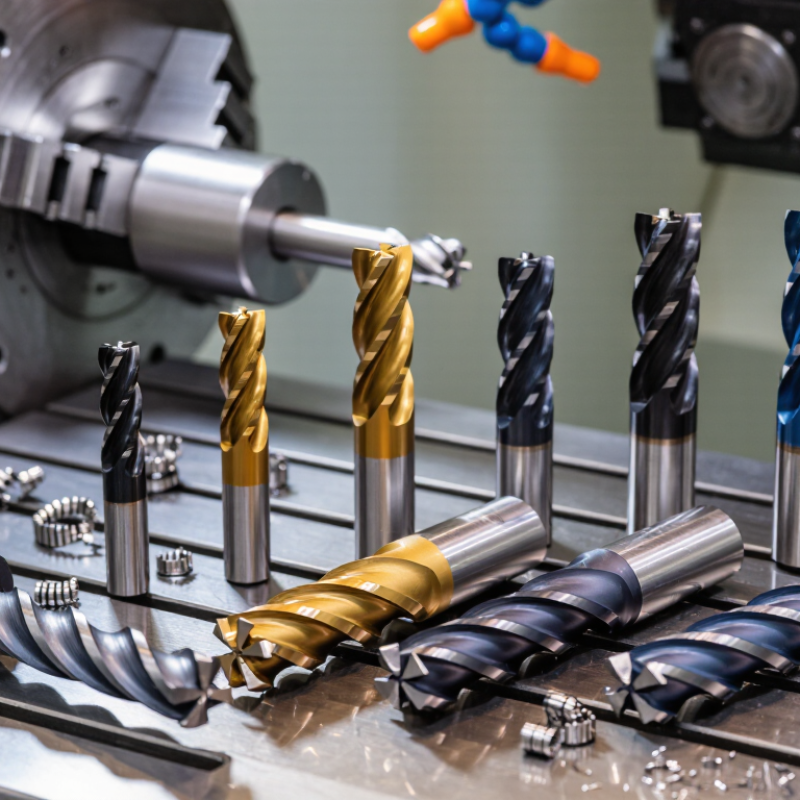
7 Best Tungsten Carbide End Mills for CNC Machining

What Tungsten Carbide End Mills Are and Why They Matter in CNC Machining

What Tungsten Carbide End Mills Are and Why They Matter in CNC Machining

Tungsten carbide end mills use hard tungsten-carbide grains bonded with cobalt. This structure resists abrasion, heat, and edge deformation better than conventional high-speed steel. During a dry cut, the tool edge may face intense friction within seconds. Carbide keeps its shape longer, especially when machining hardened steel, stainless steel, or cast iron. The USGS Mineral Commodity Summaries 2024 reported about 84,000 metric tons of global tungsten mine production in 2023. That figure shows the material’s industrial importance, but supply alone does not guarantee good cutting performance.

Tool geometry still matters. A four-flute end mill may improve finish, while fewer flutes can support chip evacuation in softer metals. Coarser carbide grades usually tolerate shock better. Fine grades can support sharper, harder edges, but they may chip under unstable conditions. That trade-off is easy to underestimate. I have seen a sharp tool fail quickly after one loose fixture exposed vibration. Industrial cutting-tool market analysis published by Grand View Research in 2024 also identifies carbide tooling as a major growth segment, driven by automated and high-speed machining.

Tips: Match flute count, helix angle, diameter, and cutting speed to the workpiece. Start with conservative feed settings. Watch the chips, not only the sound. Powdery chips can signal rubbing, while blue chips may indicate excessive heat. Check runout before blaming the tool. A small alignment error can waste an otherwise excellent end mill.

7 Best Tungsten Carbide End Mills for CNC Machining

Typical Cutting-Speed Ranges for Tungsten Carbide End Mills

Tungsten carbide end mills are valued for their high hardness, wear resistance, and ability to maintain a sharp cutting edge at elevated temperatures. The recommended surface-speed range depends strongly on the workpiece material: aluminum generally permits higher speeds, while titanium, hardened steel, and stainless steel require lower speeds to control heat and tool wear. Actual settings should also be adjusted according to tool diameter, flute count, coating, machine rigidity, coolant, and chip load.

Key Features That Define a High-Quality Carbide End Mill

Key Features That Define a High-Quality Carbide End Mill

A high-quality carbide end mill starts with material consistency, not a shiny appearance. MarketsandMarkets estimates that carbide cutting tools represent the largest product segment in the global cutting tools market. That position reflects their hardness, heat resistance, and dimensional stability. Fine-grain carbide usually supports sharper edges and better impact resistance. Cobalt content also matters. Too much can improve toughness but reduce hot hardness. Too little may cause chipping during interrupted cuts. It is a trade-off.

Coating quality deserves close inspection. A suitable multilayer coating can reduce friction, protect the edge, and improve performance in steel or stainless steel. Geometry must match the job. Variable helix designs can reduce vibration, while unequal flute spacing helps prevent harmonic marks on the workpiece. Runout is another practical test. Even 0.01 mm of runout can overload one flute and shorten tool life. I check it with a dial indicator before production runs. Small errors become expensive quickly.

The ISO 13399 standard supports consistent tool data and technical communication across manufacturers. Still, catalog values are not machining results. Actual performance depends on spindle rigidity, coolant delivery, workholding, and chip evacuation. A harder grade is not automatically better. I have seen an overly rigid edge fail where a tougher grade survived. That result was inconvenient, but useful. Testing remains necessary.

Seven Tungsten Carbide End Mill Types for Different CNC Applications

Choosing among seven tungsten carbide end mill types depends on the workpiece, machine rigidity, and cutting strategy. A square end mill suits slots, shoulders, and general profiling. A ball nose end mill produces smooth 3D contours in molds and dies. A corner-radius end mill strengthens the cutting edge during roughing. A roughing end mill removes stock quickly, leaving visible scallops. A high-feed end mill supports shallow cuts and faster material removal. Micro end mills handle tiny features, but runout becomes critical. A tapered end mill improves wall access and stability in deep cavities.

The USGS Mineral Commodity Summaries 2024 reported global tungsten mine production near 81,000 metric tons in 2023. That supply supports carbide tooling, although recycling remains important. The International Organization for Standardization recommends controlled cutting conditions through standards such as ISO 8688-2, which evaluates milling tool life. In practice, tool life changes sharply with coolant, spindle accuracy, and workholding. Small details matter.

For hardened steel, I usually test a corner-radius or coated roughing geometry first. Aluminum often favors a polished, high-helix square tool. Titanium needs conservative engagement and strong edge support. Ball nose tools can leave poor scallop patterns when stepovers are too large.

I have also seen micro tools fail from chip packing, not wear. The selection is rarely perfect. Record feed, speed, axial depth, and tool wear after each trial. Then revise the choice.

How to Match End Mill Geometry With Materials and Cutting Tasks

7 Best Tungsten Carbide End Mills for CNC Machining

Matching end mill geometry to the workpiece matters more than choosing the hardest cutter. In my machining experience, aluminum responds well to polished flutes and a high helix. These features lift chips quickly from a deep slot. Too many flutes can pack chips, especially during aggressive cutting.

For carbon steel, a variable helix can reduce vibration and leave a steadier wall finish. Roughing often benefits from fewer flutes and a stronger core. Finishing needs more cutting edges and a smaller radial engagement. Stainless steel demands a sharp edge, controlled heat, and reliable chip evacuation. Titanium needs patience. Lower surface speed, lighter radial cuts, and a strong variable-helix geometry usually work better. Tool choice still depends on machine rigidity, coolant, and workholding.

Tips: Check chip color, sound, and edge wear after the first pass. A blue chip stream may signal excessive heat. A squealing tool may indicate poor engagement or weak fixturing. Do not trust a catalog chart blindly. My first selection was technically suitable, but the workholding flexed and ruined the finish. That mistake changed my process. I now test a short toolpath before committing to production. For deep cavities, reduce stickout whenever possible. Small changes matter.

Selection, Maintenance, and Performance Tips for Carbide End Mills

Selecting the right end mill starts with the workpiece, not the catalog. For CNC machining, seven useful choices include two-flute aluminum mills, three-flute general-purpose mills, four-flute finishing mills, variable-helix mills, ball-nose mills, corner-radius mills, and roughing mills. ISO 513 classifies cutting materials by hardness and application, helping machinists match carbide grades with steel, stainless steel, cast iron, or nonferrous alloys. The U.S. Geological Survey reported about 84,000 metric tons of global tungsten mine production in 2023. That supply reality supports careful tool selection and longer service life.

Cutting data must follow the tool diameter, flute count, material, and machine rigidity. Reduce radial engagement before immediately lowering spindle speed. Excessive heat often appears as a thin bronze or blue line near the cutting edge. A coolant stream that misses the flute can make the problem worse. Keep tool holders clean, measure runout, and replace worn collets. ISO 8688-2 provides guidance for milling tool-life testing, but shop results still vary with fixturing and vibration. I have seen a new cutter fail early because chips were recut inside a deep pocket.

Maintenance should include checking edge chipping under magnification, recording tool life, and storing cutters in separated sleeves. A 0.01 mm runout can load one flute heavily. That small error matters. Variable-helix designs often reduce harmonic vibration, while polished flutes can improve chip evacuation in aluminum. I would not trust a single speed chart blindly; actual sound, chip shape, and edge wear deserve equal attention. Data helps, but the machine eventually exposes weak assumptions.

FAQS

What are tungsten carbide end mills made of?

They contain hard tungsten-carbide grains bonded with cobalt. This structure resists wear, heat, and edge deformation.

Why are carbide end mills useful in CNC machining?

They keep their cutting shape longer during difficult cuts. They suit hardened steel, stainless steel, and cast iron.

Which end mill type suits general profiling and slotting?

A square end mill works well for slots, shoulders, and basic profiles. It leaves a flat cutting edge.

When should I use a ball nose end mill?

Use it for smooth three-dimensional contours, molds, and dies. Keep the stepover small to reduce scallop marks.

What end mill helps during heavy material removal?

A roughing end mill removes stock quickly. Its surface may show visible scallops afterward.

How should I choose the flute count?

More flutes can improve surface finish. Fewer flutes often provide better chip evacuation in softer metals.

What problems can affect micro end mills?

Runout and chip packing can break them quickly. Check alignment carefully before increasing cutting speed.

How can cutting chips reveal machining problems?

Powdery chips may indicate rubbing. Blue chips can show excessive heat. Watch the chips.

What settings should I record during tool testing?

Record feed, speed, axial depth, workpiece material, and visible wear. Small notes can prevent repeated mistakes.

Why does workholding matter so much?

A loose fixture can create vibration and destroy a sharp edge quickly. I have underestimated this before.

Conclusion

Tungsten Carbide End Mill tools are essential for CNC machining because their exceptional hardness, wear resistance, and thermal stability enable accurate, efficient cutting across demanding materials. This article explains what makes carbide end mills valuable and examines the features that define high quality, including carbide grade, coating, flute design, helix angle, core strength, and manufacturing precision. It also introduces seven common end mill types, such as square, ball nose, corner-radius, roughing, and specialized finishing designs, each suited to different machining goals.

Choosing the right geometry requires careful consideration of the workpiece material, hardness, surface requirements, cutting depth, and machine conditions. The article also provides practical guidance on selecting cutting parameters, controlling heat and chip evacuation, inspecting tool wear, and maintaining proper storage and handling. With the correct match between tool design and application, carbide end mills can improve dimensional accuracy, surface finish, tool life, and overall CNC productivity.

Oliver

Oliver

Oliver is a seasoned marketing professional with a wealth of expertise in driving brand awareness and engagement. With a deep understanding of our company's product offerings, he consistently delivers high-quality content that enriches our professional blog. His insights not only shed light on......